Perolini Luxe Tiles understands something many property owners learn the hard way—bathroom safety starts from the ground up. A bathroom may be one of the smallest rooms in a building, yet it carries one of the highest slip risks. Whether you manage commercial spaces or design homes, choosing the right tile matters more than many realize.
That is exactly why selecting the right Floor Tiles Bathroom solution is no longer just about looks. It is about safety, durability, maintenance, and long-term value. A glossy tile may look stunning in a showroom, but once water, soap, and steam enter the picture, things change fast.
According to the CDC, falls remain one of the leading causes of injuries at home and in commercial spaces. Wet flooring significantly increases that risk. For business owners running hotels, spas, gyms, or residential projects, anti-slip flooring is less of a luxury and more of a practical necessity.
Why Anti-Slip Tiles Matter More Than Ever?
Let’s be honest—most people notice color and design first. Texture? Slip resistance? Usually not. But those “invisible” details often make the biggest difference.
Anti-slip bathroom tiles are designed with textured surfaces or specialized finishes that improve grip, even when wet. This reduces the chances of slipping without compromising aesthetics.
Key benefits include:
- Improved Safety: Reduces slip-related accidents in wet zones.
- Lower Liability: Particularly useful for hotels, resorts, and public washrooms.
- Long-Term Durability: High-quality anti-slip tiles resist wear and moisture damage.
- Better User Experience: People feel safer moving around barefoot.
For B2B buyers, this means fewer complaints and lower maintenance costs. For homeowners, it means peace of mind—especially if children or elderly family members use the bathroom regularly.
What Makes a Tile Slip Resistant?
Not all bathroom tiles offer the same performance. Slip resistance is often measured using friction ratings or surface grip values.
In simple terms, the rougher or more textured the tile surface, the better the grip. But there’s a balance. Too rough, and cleaning becomes difficult. Too smooth, and safety drops.
Look for these features:
- Matte or textured finishes
- High friction coefficient
- Water-resistant surface technology
- Dense, low-porosity materials
Porcelain and ceramic remain popular choices because they offer excellent water resistance with flexible design options.
Best Materials for Bathroom Floor Tiles
If you’re selecting tiles for a residential or commercial project, material selection matters just as much as design.
1. Porcelain Tiles
Highly dense, durable, and moisture-resistant. Perfect for heavy-use bathrooms.
2. Ceramic Tiles
Cost-effective and versatile. Many premium Ceramic Tiles Dubai collections now come with anti-slip technology and luxurious finishes.
3. Natural Stone
Elegant but requires sealing and maintenance. Often preferred in luxury spaces.
Many architects today choose porcelain or ceramic because they combine beauty with practicality. That combination is hard to beat.
Design Without Compromising Safety
Here’s a common misconception: anti-slip tiles look dull. Not anymore.
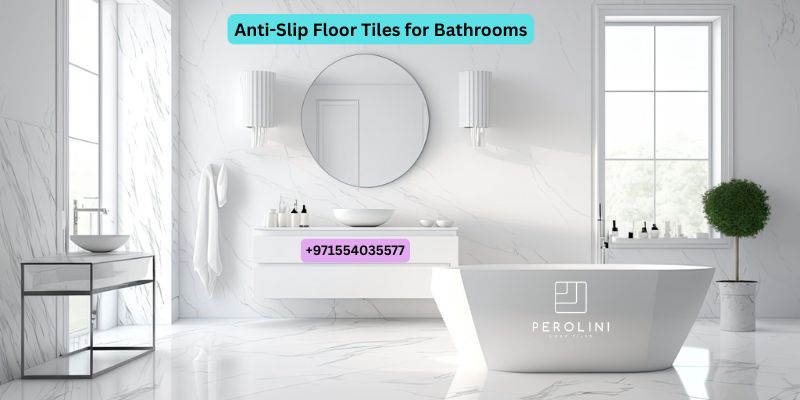
Modern tile manufacturing has evolved dramatically. Today’s anti-slip tiles come in wood, marble, concrete, terrazzo, and stone-inspired finishes. You can create spa-like bathrooms without sacrificing safety.
If you want inspiration for balancing aesthetics and functionality, explore Elevate Your Bathroom Interiors with Elegant Surface Solutions. It offers excellent ideas for modern bathroom transformations.
Trending bathroom tile styles:
- Stone-look anti-slip tiles
- Large-format neutral tiles
- Textured grey flooring
- Wood-finish waterproof tiles
These styles are especially popular in hospitality and premium residential projects.
How Business Owners Benefit from Anti-Slip Tiles?
If you operate a hotel, restaurant, wellness center, or real estate business, flooring decisions affect brand perception.
A slippery bathroom floor can lead to customer complaints, negative reviews, or worse—injury claims. Meanwhile, premium anti-slip tiles enhance safety while reinforcing quality.
Think of flooring as a silent investment. Customers may not compliment it directly, but they definitely notice when it feels unsafe.
That subtle trust matters.
Maintenance Tips for Long-Term Performance
Even the best anti-slip tiles need proper maintenance to stay effective.
Follow these simple practices:
- Clean soap residue regularly
- Avoid wax-based cleaners
- Use soft brushes for textured surfaces
- Check grout lines for mold buildup
Routine maintenance preserves both safety and appearance.
Frequently Asked Questions
Are anti-slip tiles difficult to clean?
No. Modern anti-slip tiles are designed for easy cleaning while maintaining grip. Mild cleaners usually work well.
Which tile is best for wet bathrooms?
Porcelain and ceramic tiles with textured finishes are among the best choices for wet bathrooms due to their water resistance and durability.
Do anti-slip tiles cost more?
They may cost slightly more upfront, but the added safety and durability often provide better long-term value.
Can anti-slip tiles still look luxurious?
Absolutely. Today’s premium anti-slip tiles come in elegant finishes that mimic marble, wood, and natural stone.
Final Thoughts
Bathroom flooring should never force you to choose between safety and style. The best spaces deliver both. Whether you’re a homeowner, architect, or business owner, anti-slip tiles offer a smart investment that protects people while enhancing visual appeal. In the long run, safe flooring always proves valuable.
Full Audio Version: Click Here