
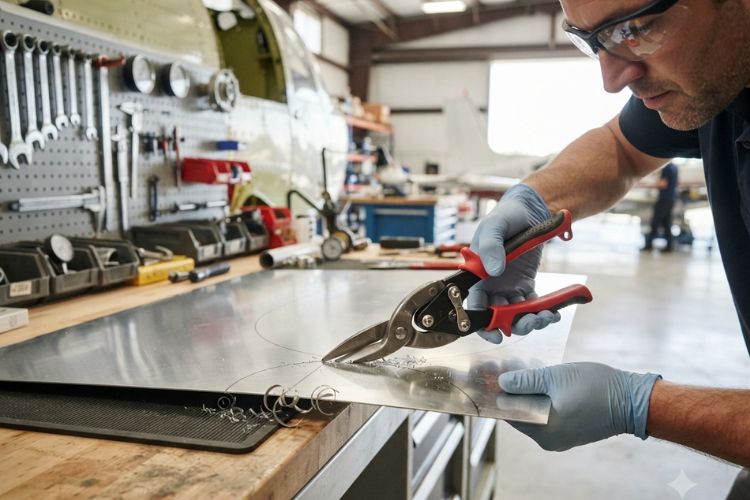
Modern aviation workshops need precision tin snips because aircraft sheet-metal work demands clean, controlled cuts without unnecessary distortion. In 2026, technicians are working with lightweight alloys, tighter repair tolerances, and increasingly detail-focused maintenance procedures. A dependable Aviation Tin Snip Supplier can therefore make a practical difference in both workmanship and workshop efficiency.
Also Read: Hand Tools Supplier In UAE | Quality Tools for Modern Workshops
What Makes Aviation Tin Snips Different?
An aviation tin snip is a hand-operated cutting tool designed to cut thin sheet metal with better control than many general-purpose cutting tools. Aviation-style snips are particularly useful when technicians need to follow short curves, make straight cuts, or trim material around detailed sections.
The important point is control. Aviation maintenance is rarely about simply cutting a piece of metal. The technician often needs to remove only the damaged section while preserving the surrounding material. A precise snip helps make that job more predictable.
Why Precision Matters in Aircraft Sheet-Metal Work
Aircraft structures can involve thin aluminium alloys and other sheet materials where rough handling can create unwanted bends, burrs, or deformation. A clean cut gives technicians a better starting point for fitting, forming, fastening, or finishing the replacement section.
Key advantages include:
- Cleaner cutting: Sharp, well-designed blades can produce controlled cuts through suitable sheet materials.
- Better access: Compact handles and angled cutting heads can help technicians work around restricted areas.
- Improved control: Hand-operated snips allow small adjustments that may be difficult with larger cutting equipment.
- Reduced material disturbance: Proper technique can minimize unnecessary bending around the cut line.
Where Are Precision Tin Snips Used?
Precision snips have a useful role in several workshop situations. They are commonly considered for trimming and shaping thin sheet metal during maintenance, fabrication, and repair preparation.
For example, a technician may need to trim a small sheet-metal patch before positioning it over a prepared repair area. The goal is not maximum cutting speed; it is getting the correct shape with minimal correction afterward.
They can also be useful when preparing edges, making small adjustments to panels, or cutting sections where access is more important than power.
How to Choose the Right Aviation Tin Snip
Choosing a snip should begin with the material, cutting direction, workspace, and expected frequency of use. The most expensive tool is not automatically the best choice for every maintenance task.
Follow these practical steps:
- Identify the material. Confirm the thickness and type of sheet metal the tool is intended to cut.
- Determine the cut direction. Straight, left-cut, and right-cut designs can serve different working situations.
- Check the handle design. Comfortable grips matter when technicians perform repeated cutting tasks.
- Inspect blade quality. The cutting edges should meet evenly and operate smoothly without excessive play.
- Match the tool to the job. Use aviation snips for appropriate sheet-metal applications rather than forcing them through materials beyond their intended capacity.
Why Tool Quality Matters More in 2026
Modern workshops are under constant pressure to improve productivity without compromising maintenance quality. That makes tool selection more important than it may initially appear.
A poorly performing snip can turn a simple trimming operation into a sequence of corrections. The technician may have to straighten the material, clean an inconsistent edge, or repeat the cut. Those small delays accumulate across a busy workshop.
This is where dependable sourcing becomes valuable. Working with established Tools Suppliers In UAE Dubai UAE can make it easier for aviation and industrial workshops to select tools based on application, quality, and availability rather than price alone.
Precision Cutting Is Part of a Bigger Maintenance Process
Aviation tin snips do not work in isolation. Sheet-metal maintenance usually involves several stages, from inspection and measurement through cutting, forming, fastening, and final checking.
A simple workflow looks like this:
- Inspect: Identify the damaged or required section and understand the repair objective.
- Measure: Mark the intended cut accurately before putting the snips to work.
- Cut: Use controlled pressure rather than forcing the blades through the material.
- Check: Inspect the resulting edge and dimensions before proceeding to the next operation.
This process highlights an important workshop principle: precision begins before the tool touches the material. Even the best snip cannot compensate for inaccurate marking or unsuitable technique.
Why Tool Selection Should Be Based on the Entire Workshop
A good aviation workshop does not evaluate hand tools individually. It considers how those tools fit into the complete maintenance workflow. If technicians regularly perform sheet-metal work, having suitable snips readily available can reduce unnecessary tool changes and interruptions.
The same thinking applies to fastening and assembly work. Accurate torque control, for example, becomes important when components must be tightened according to specified requirements. A specialist Torque Wrench Supplier In Dubai UAE can support workshops looking for appropriate torque tools alongside their broader hand-tool requirements.
FAQs About Aviation Tin Snips
What are aviation tin snips used for?
Aviation tin snips are primarily used for cutting and trimming suitable thin sheet metals, particularly where controlled straight or curved cuts are required.
Why use aviation snips instead of ordinary scissors?
Aviation snips are specifically designed for sheet-metal cutting. Their blade geometry, leverage, and handle design provide better control and durability for appropriate metal-cutting applications.
Can aviation tin snips cut all types of metal?
No. Their capability depends on the specific tool and material thickness. Always check the manufacturer’s recommended material range before cutting.
Are left- and right-cut aviation snips different?
Yes. Different cutting orientations help technicians follow particular curves and access areas more comfortably. The correct type depends on the direction and shape of the cut.
How can technicians extend the life of tin snips?
Use them only within their rated application, keep the blades clean, avoid cutting unsuitable materials, and store them properly after use. Regular inspection also helps identify wear early.
Also Read: How Tool Trolleys Improve Productivity | Tool Trolley And Cabinets Supplier
Final Takeaway
Precision tin snips may look like a simple hand tool, but their value becomes clear when a repair depends on an accurate, controlled cut. In modern aviation workshops, small improvements in tool control can prevent unnecessary rework and support a more consistent maintenance process. The smartest approach is to choose the right snip for the material, task, and technician—not simply the cheapest tool available.
Blog Development Credits:
This blog is the result of collaborative creativity. The initial concept was thoughtfully envisioned and developed by the expert team at Abasco Tools, a leading name among Tools Suppliers in Dubai, UAE and trusted Brass Hammer Suppliers in Dubai, UAE. The core content was crafted using advanced AI tools such as ChatGPT and Google Gemini.