
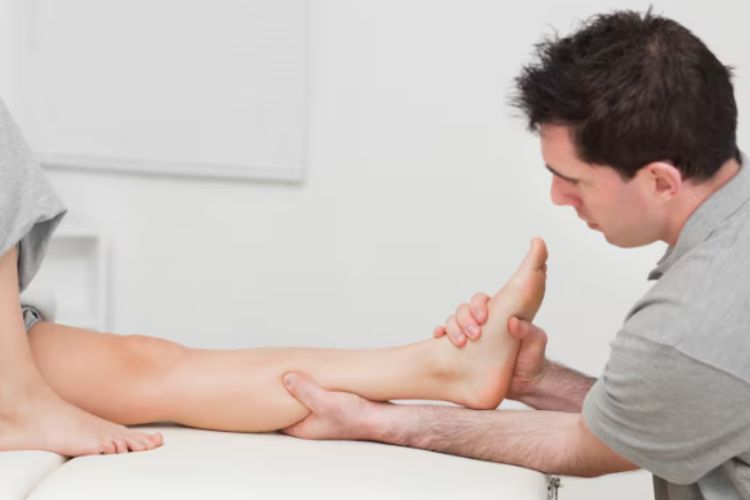
Flat feet can look alarming, especially when an arch seems to disappear completely while standing. But a low arch is not automatically a medical problem. The right approach depends on age, flexibility, symptoms, and how much the foot affects daily movement. Knowing when to simply monitor and when to seek best treatment of flat foot can make a big difference.
Why Age Matters When Treating Flat Feet
A child’s foot is still developing, so treatment decisions are quite different from those for an adult. The American Academy of Orthopaedic Surgeons notes that many children have flexible flat feet, where the arch appears when sitting or standing on tiptoes. If there is no pain or functional difficulty, treatment is often unnecessary.
In fact, flat feet are relatively common during childhood and tend to become less frequent as the foot matures. One study of schoolchildren found flat feet in 16.1% of participants, with prevalence decreasing with age.
Treatment by Age Group
Babies and Young Children
For toddlers and preschoolers, observation is often the smartest treatment. Their arches are still developing, and many children naturally develop a more visible arch as they grow. Supportive, well-fitting footwear is useful, but trying to “force” an arch into existence with rigid devices is usually unnecessary.
- No pain: Monitor growth and walking pattern.
- Frequent tiredness or discomfort: Ask a specialist about stretching, footwear or simple inserts.
- Rigid or painful flat feet: Arrange an evaluation rather than assuming it is normal.
Parents should also distinguish ordinary flexible flat feet from other structural concerns. For broader context, see Pediatric Foot Deformities.
School-Age Children and Teenagers
Once a child becomes more active, symptoms become easier to notice. Pain after sports, frequent complaints of tired feet, difficulty keeping up with peers, or uneven shoe wear deserve attention. Stretching the calf and heel cord may help when tightness contributes to symptoms. Over-the-counter arch supports can also reduce discomfort in some children. AAOS specifically notes that custom-molded inserts are not always necessary for flexible pediatric flatfoot.
Surgery is uncommon in children. It may be considered for an older child or teenager with persistent pain or a rigid, progressively troublesome deformity after appropriate non-surgical care.
Flat Feet in Adults: Severity Changes the Strategy
Adult flat feet can be lifelong, but they can also develop gradually. In some adults, weakening or dysfunction of the posterior tibial tendon contributes to progressive arch collapse. AAOS describes this condition as progressive collapsing foot deformity and notes that early cases can often be managed without surgery.
For mild symptoms, treatment may focus on reducing strain rather than trying to rebuild the arch completely. A combination of supportive footwear, activity modification, calf stretching and strengthening exercises may be appropriate. Orthotics can help support alignment and reduce stress on painful areas.
If pain, swelling, weakness or visible deformity is increasing, seeing a flat feet doctor in Kolkata can help determine whether the problem is flexible, rigid, tendon-related or associated with another foot condition.
What Works for Moderate to Severe Flat Feet?
Moderate or severe cases usually require a more personalised plan. The goal is not simply to make the arch look higher; it is to improve comfort, stability and function.
- Orthotics or braces: These can support the arch and control unwanted foot movement. More substantial bracing may be considered when the deformity is pronounced.
- Physical therapy: Strengthening the muscles supporting the foot and stretching a tight calf or Achilles tendon can improve function in selected patients.
- Temporary immobilisation: In certain painful tendon-related cases, a walking boot or cast may be used for a limited period under medical supervision.
Think of orthotics as scaffolding rather than a permanent “fix.” They can reduce mechanical stress while the muscles and tendons are being trained to work more efficiently.
When Should You Seek Medical Attention?
Flat feet deserve a professional assessment when they are painful, suddenly worsening, noticeably rigid, associated with swelling, or interfering with walking, running or standing. A new flatfoot in an adult is particularly worth investigating because it may signal a tendon or ligament problem rather than simply a natural foot shape.
- Persistent arch, heel or inner-ankle pain
- Difficulty standing on tiptoes
- Rapid change in foot shape
- Repeated ankle problems or unusual shoe wear
- Pain that limits sports, work or everyday walking
FAQs About Flat Feet Treatment
1. Can flat feet be cured completely?
Not every case needs to be “cured.” Flexible, painless flat feet may simply be a normal variation. When symptoms exist, treatment aims to improve comfort, movement and stability rather than guarantee a permanently visible arch.
2. Do children with flat feet always need orthotics?
No. Many children with painless flexible flat feet need no treatment. If discomfort or fatigue develops, an appropriate shoe insert may provide relief.
3. Are exercises useful for adult flat feet?
They can be. Strengthening and stretching programs may improve function, particularly when tendon weakness or calf tightness contributes to the problem. A clinician or physical therapist should tailor exercises to the individual.
4. Does severe flat foot always require surgery?
No. Even some advanced cases can be managed with orthotics, braces, activity changes and rehabilitation. Surgery is generally considered when significant symptoms or structural problems persist despite appropriate conservative treatment.
Final Thoughts
The best flat-foot treatment is rarely a one-size-fits-all prescription. A painless flat foot in a growing child may need nothing more than observation, while a painful adult foot with progressive collapse may need targeted rehabilitation, orthotics or more advanced care. Age tells part of the story; symptoms and severity complete it. When in doubt, an accurate assessment is the best place to start.