
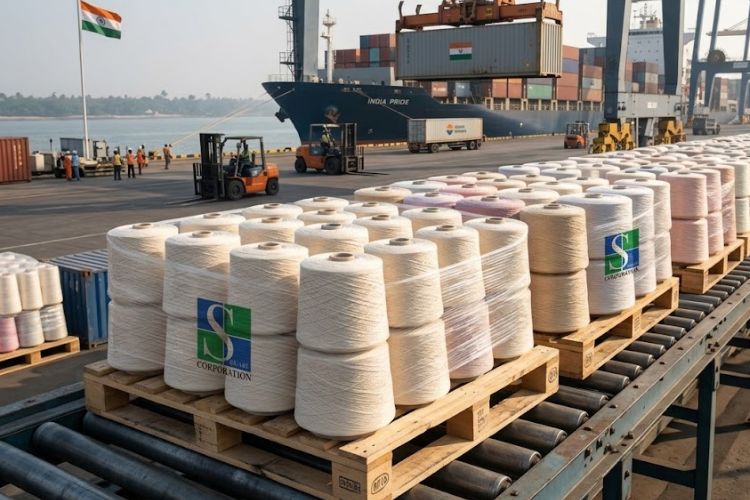
Quality has become the defining factor in today’s textile trade. International buyers no longer evaluate cotton yarn solely on price—they expect consistency, traceability, and dependable performance. Understanding India’s export quality standards helps manufacturers, importers, and textile businesses build long-term partnerships while delivering products that meet global market expectations. Many textile businesses also source fabrics from Organic Fabric Suppliers in India to create sustainable product collections.
India has earned a strong reputation as one of the world’s leading cotton yarn producers. However, maintaining export-grade quality requires far more than selecting premium cotton. Every stage—from fiber selection to packaging—must follow strict processes that satisfy international buyers across apparel, home textiles, and industrial fabric sectors.
Also Read: How to Ensure Your Fabric Colors Stay Bright and Lasting
Why Export Quality Standards Matter
Export buyers rely on predictable yarn performance because even minor inconsistencies can affect weaving efficiency, dye absorption, and fabric appearance. High-quality yarn reduces machine downtime, minimizes production waste, and improves the finished textile’s durability.
According to the Cotton Corporation of India, India remains one of the world’s largest cotton-producing nations, supplying raw materials to textile manufacturers across numerous international markets.
Key Quality Parameters Buyers Evaluate
- Yarn Count Accuracy: Uniform count ensures consistent fabric construction.
- Strength: Higher tensile strength supports efficient weaving and knitting.
- Evenness: Reduced yarn variation creates smoother fabric surfaces.
- Low Hairiness: Minimizes lint formation and enhances fabric appearance.
- Moisture Control: Proper conditioning preserves yarn quality during transportation.
Manufacturing Practices Behind Export-Grade Yarn
Modern spinning mills combine advanced machinery with skilled technicians to maintain strict quality benchmarks. Automated monitoring systems identify irregularities early, allowing manufacturers to maintain consistency across production batches.
Many exporters conducting Cotton Yarn Export from India also implement rigorous laboratory testing before shipments leave the factory. These evaluations help verify yarn strength, elongation, contamination levels, and dimensional stability.
Essential Quality Control Steps
- Careful grading of raw cotton before spinning.
- Continuous monitoring using electronic yarn testing equipment.
- Batch-wise laboratory inspection.
- Standardized cone winding and packaging.
- Final export inspection before container loading.
International Standards That Build Buyer Confidence
Leading exporters often align production with internationally recognized quality management systems. Certifications demonstrate a manufacturer’s commitment to consistent processes and customer satisfaction.
The International Organization for Standardization (ISO) emphasizes quality management practices that improve operational consistency. Likewise, organizations such as Textile Exchange encourage responsible sourcing and sustainable textile production throughout global supply chains.
What Experienced Buyers Usually Look For
- Transparent testing reports.
- Reliable batch consistency.
- Timely export documentation.
- Sustainable manufacturing practices.
- Responsive customer support throughout the order process.
Emerging Trends in Cotton Yarn Exports
The textile industry continues evolving as buyers seek environmentally responsible products without compromising quality. Demand is increasing for combed cotton yarn, compact spun yarn, and sustainable cotton yarn suppliers, particularly among premium apparel brands.
Industry insights published by the Invest India platform highlight India’s growing textile manufacturing capabilities, supported by modernization, export-focused policies, and increasing investments in value-added textile production.
Frequently Asked Questions
What makes cotton yarn export quality different?
Export-quality yarn offers better consistency, strength, evenness, and testing standards to meet international manufacturing requirements.
Which industries purchase export-quality cotton yarn?
Apparel manufacturers, home textile producers, knitting units, denim mills, and industrial fabric manufacturers commonly import premium cotton yarn.
How is export-quality yarn tested?
Manufacturers perform laboratory testing for count, strength, evenness, hairiness, moisture content, and contamination before shipment.
Why do international buyers prefer Indian cotton yarn?
India combines abundant cotton production, advanced spinning technology, competitive pricing, and experienced exporters capable of supplying consistent quality.
Also Read: Indian Yarn Exporters Serving the Textile Industry
Final Thoughts
Maintaining cotton yarn export quality standards is about more than meeting technical specifications. It reflects a manufacturer’s commitment to reliability, innovation, and long-term customer relationships. Businesses that consistently deliver high-quality yarn are better positioned to succeed in increasingly competitive global textile markets.
Blog Development Credits:
This article was planned by Square Corporation. AI-powered research and drafting utilized ChatGPT, Google Gemini, and Copilot, while the final content refinement, SEO optimization, and editorial review were completed by Square Corporation.