The first school experience leaves a lasting impression—not because children remember every lesson, but because they remember how learning felt. Did it feel exciting? Safe? Curious? Early childhood education has moved far beyond alphabets and numbers, and today’s CBSE nursery programs are increasingly designed around exploration, confidence, and meaningful everyday experiences.
For parents beginning the school journey, understanding how structured early learning works can make decisions feel less overwhelming. Families exploring nursery admission in cbse school Kolkata are often discovering that nursery education is no longer preparation for school—it is school, thoughtfully designed for young learners.
Why Early Childhood Learning Matters More Than Ever
Children absorb information differently during their earliest years. Their learning doesn’t happen in neat academic boxes. It appears in conversations, role play, storytelling, movement, and moments adults sometimes overlook.
Research shared by the Center on the Developing Child at Harvard University highlights that early experiences significantly influence brain architecture and future learning capacity. Rather than accelerating academics, quality nursery education focuses on building the foundations that support later success.
That shift has changed expectations around preschool education and child development programs across India.
How CBSE Nursery Programs Support Early Development
Learning Through Discovery, Not Pressure
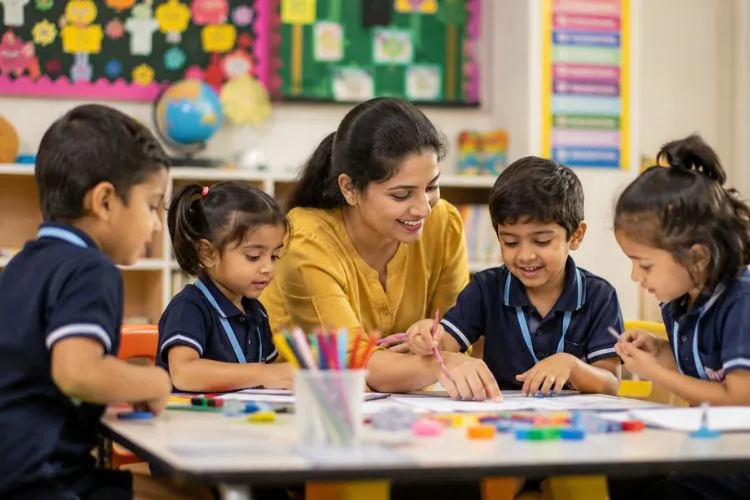
A well-designed CBSE nursery classroom rarely feels rigid. Instead, children move between guided activities and open-ended experiences that encourage observation and participation.
You might find one group building shapes, another discussing colors, and someone proudly explaining why their paper airplane “flies faster.” Those moments matter more than they appear.
Common learning approaches include:
- Story-based language development
- Sensory and hands-on exploration
- Music and movement activities
- Collaborative play and social interaction
- Age-appropriate communication exercises
These experiences contribute to cognitive growth while supporting emotional confidence.
Building Skills Before Academic Performance
One interesting thing about effective nursery education is that outcomes often appear indirectly.
Children begin developing:
- Listening and attention habits
- Independent decision-making
- Fine and gross motor coordination
- Comfort with routines and transitions
- Early literacy and numeracy awareness
These are not “extra” skills—they become the foundation for future classroom success.
The Role of Environment in Early Learning
Parents sometimes focus heavily on curriculum, but the environment can quietly shape development just as much.
Classroom design, teacher interactions, outdoor activities, and opportunities for expression all influence how children connect with learning.
That’s one reason families evaluating top cbse schools in Kolkata increasingly look beyond facilities and ask deeper questions about teaching philosophy and student engagement.
Early learning environments that feel emotionally secure tend to encourage stronger participation and confidence.
Modern Nursery Programs Are Becoming More Balanced
Another noticeable change in early childhood education is balance.
According to guidance from India’s Ministry of Education, foundational learning approaches are increasingly emphasizing play, communication, curiosity, and developmental readiness instead of intensive academic drilling.
That means nursery classrooms are gradually evolving into spaces where children can experiment, speak freely, and develop relationships with learning itself.
Parents often notice unexpected changes at home too—more questions, more imagination, and surprisingly thoughtful observations.
What Parents Can Look for During School Selection
- Warm and responsive teacher interaction
- Balanced daily routines
- Opportunities for creative expression
- Safe and stimulating learning spaces
- Strong communication with families
The strongest nursery programs rarely promise advanced academics. Instead, they help children enjoy becoming learners.
FAQs
What age is suitable for nursery admission in CBSE schools?
Most schools follow age guidelines that generally begin around three years, though requirements may vary by institution.
Do nursery programs focus only on play?
No. Play is used intentionally to support language, social skills, early concepts, and emotional development.
How does early childhood learning support future academics?
It builds foundational skills such as attention, communication, curiosity, and confidence that support later classroom learning.
Should parents prioritize academics during nursery years?
Balanced development usually delivers stronger long-term outcomes than early academic pressure.
Final Thoughts
Early childhood learning is less about creating high performers and more about creating eager learners. When nursery education is built around curiosity, connection, and confidence, children gain something remarkably valuable—the belief that learning can be enjoyable from the very beginning.