Choosing bird toys for resale is about more than attractive colors and clever shapes. Today’s buyers want natural materials, thoughtful designs, and products birds can actually enjoy. If you are sourcing
natural bird toys wholesale, understanding the difference between wood, sola, coconut, and other plant-based materials can help you build a safer, more appealing product range.
Why Natural Materials Make Sense?
Birds are naturally curious. Parrots, in particular, spend a lot of time manipulating objects with their beaks and feet, so a good toy should give them something meaningful to do rather than simply occupy space in a cage.
The Association of Avian Veterinarians (AAV) recognizes several untreated, bird-safe woods—including balsa, poplar, birch, maple, ash, and manzanita—for toys and perches. It also recommends that wood be pesticide-free and free from preservatives or other chemicals.
AAV's bird-safe wood guidance offers useful reference material for buyers and retailers.
For a wholesale business, this matters because natural toys can appeal to several customer groups at once: pet shops, bird breeders, online retailers, rescue organizations, and bird owners looking for enrichment products with a more natural feel.
From Wood to Sola: Know Your Materials
Wood: The Reliable Classic
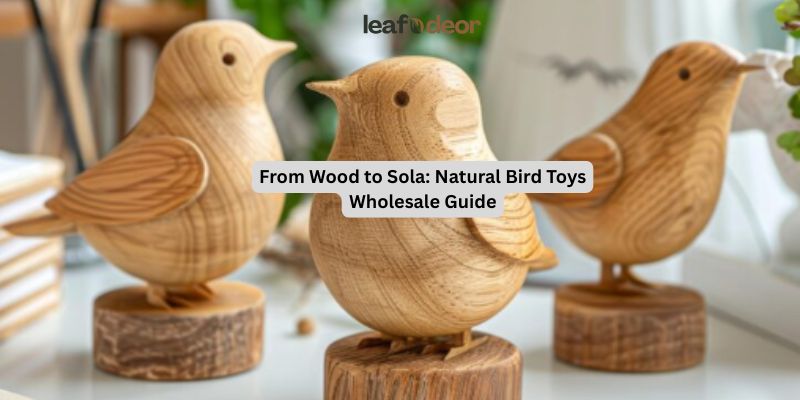
Wood remains one of the most versatile materials for bird toys. Softer woods can be particularly useful for birds that love chewing, while harder varieties can add durability and different textures to a toy collection.
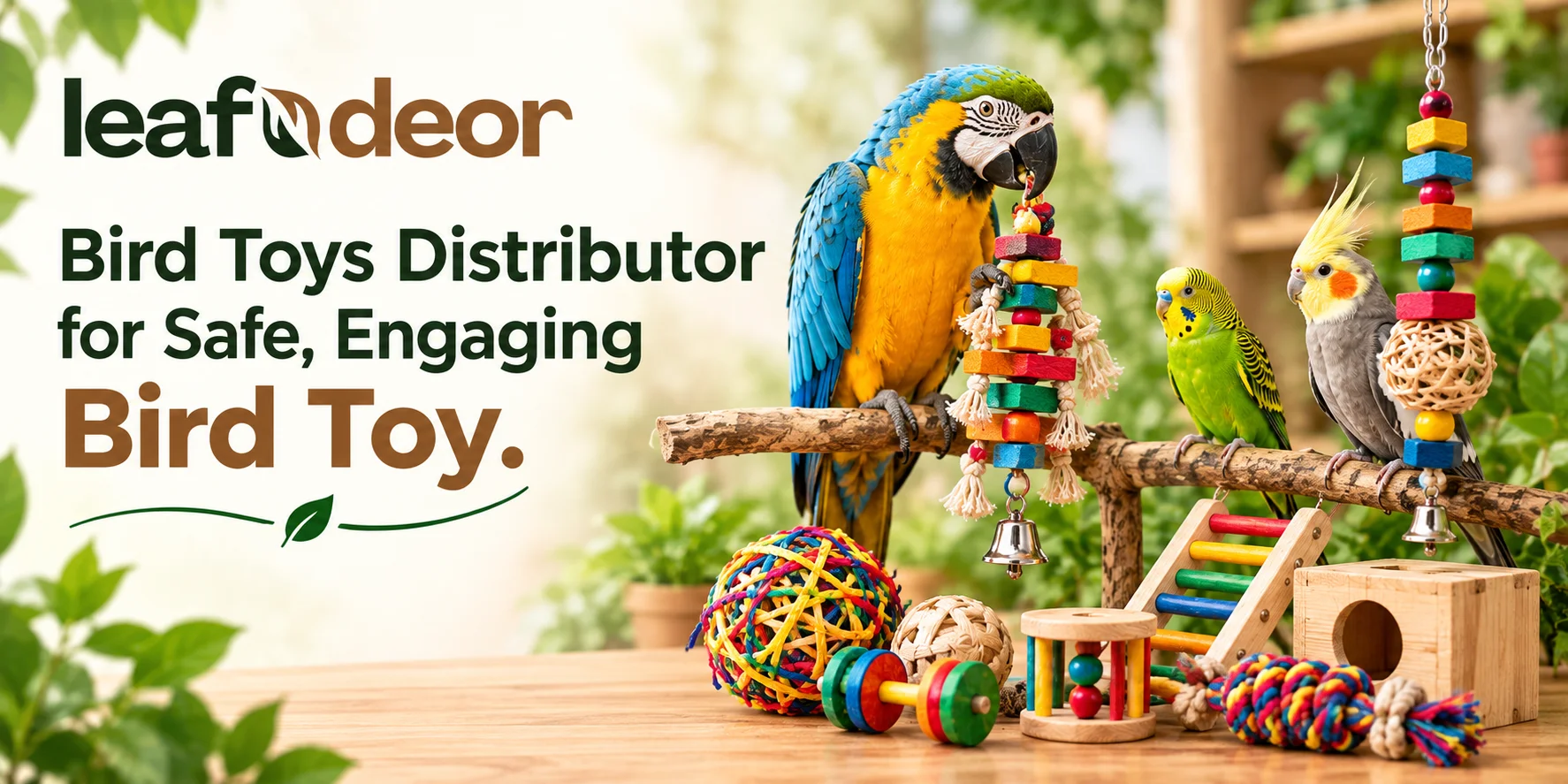
Rather than filling a wholesale catalogue with one type of wooden toy, consider mixing shapes and textures. Blocks, beads, ladders, hanging pieces, chewable branches, and shredding combinations can create a much more interesting assortment.
Sola Wood: Lightweight and Easy to Chew
Sola is an especially interesting material for retailers targeting smaller birds and birds that enjoy gentle chewing. According to the Association of Avian Veterinarians, sola comes from
Aeschynomene aspera, a flowering plant in the Fabaceae family. It is exceptionally lightweight and has a naturally cork-like texture.
That softness makes sola balls, blocks, and shapes an attractive addition to a natural bird toy range. They can also work well as components in larger shredding or foraging toys.
Beyond Wood: Coconut, Palm and Natural Fibres
Natural bird toys do not have to stop at wood. Coconut husk, palm, seagrass, willow, cork, banana leaf, raffia, and similar materials can introduce different textures and encourage chewing, tearing, climbing, and exploration. The AAV specifically highlights several of these natural materials as useful bird-toy options.
- Wood: Ideal for chewing, climbing, and structural toy components.
- Sola: Lightweight and suitable for softer chewing and shredding.
- Coconut and palm: Useful for texture, hiding spaces, and natural-looking designs.
- Seagrass and similar fibres: Helpful for weaving, shredding, and manipulative enrichment.
What Should Wholesale Buyers Look For?
Buying in bulk can make pricing attractive, but price should not be the only filter. A toy that looks inexpensive can become a poor investment if customers complain about weak construction, unsuitable materials, or inconsistent quality.
When comparing
bird toys wholesale suppliers, pay attention to:
- Material transparency: Ask what woods, fibres, dyes, adhesives, and hardware are used.
- Construction quality: Check whether knots, links, strings, and attachments are securely finished.
- Product variety: A balanced catalogue should include chew, shred, climb, swing, and foraging options.
- Consistency: Wholesale customers need repeatable quality from one shipment to the next.
- Packaging: Natural products should be protected from unnecessary moisture, dirt, and damage during storage and transit.
It is also worth reading
How to Choose the Best Toys for Your Bird: Important Considerations before finalizing your product mix.
Safety Should Never Be an Afterthought
Natural does not automatically mean suitable for every bird. That distinction is important for retailers. AAV advises choosing nontoxic toy materials and supervising birds with their toys, because even an otherwise safe toy can become hazardous if a bird begins swallowing pieces or becomes caught in a component.
For wholesale buyers, a practical quality-control checklist includes:
- Use untreated, pesticide-free wood from a reliable source.
- Check toys for loose parts, sharp edges, or poorly secured attachments.
- Consider the bird species and beak strength when selecting toy sizes.
- Inspect products periodically for wear before they reach customers.
The AAV also recommends caution with toy attachments and notes that improperly designed clasps can trap feet or beaks. In other words, the smallest component can sometimes deserve as much attention as the main toy itself.
FAQs About Natural Bird Toys Wholesale
What materials are commonly used in natural bird toys?
Common options include untreated bird-safe wood, sola, coconut husk, palm, cork, seagrass, willow, banana leaf, and other natural plant fibres. The suitability of a material depends on how it is processed and used.
Are sola wood toys suitable for all birds?
Sola is very soft and lightweight, making it particularly appealing for smaller birds and gentle chewers. However, toy choice should always consider the individual bird's size, beak strength, habits, and supervision needs.
What should I ask a wholesale bird toy supplier?
Ask about material sourcing, treatment or processing, dyes and adhesives, hardware, quality-control procedures, minimum order quantities, packaging, and whether custom designs are available.
How often should bird toys be checked?
Bird toys should be inspected regularly and whenever they show signs of damage. Chewed, frayed, broken, or loose components should be replaced promptly rather than waiting for the toy to fail completely.
Final Thoughts
A strong natural bird toy collection is not simply a pile of wooden shapes. It is a thoughtful mix of textures, strengths, materials, and activities designed around how birds naturally explore their surroundings. For wholesale buyers, choosing dependable materials and consistent manufacturing can turn that simple idea into a product range customers trust—and birds actually enjoy.
Full Audio Version:
Click Here 
Comments (0)
Leave a Comment