When a piping system faces heat, vibration, pressure changes, or repeated movement, even a small component can make a big difference. That is where expansion joints come into play. But with so many suppliers in the market, how do you know which manufacturer can actually deliver dependable performance rather than just a product that looks good on paper?
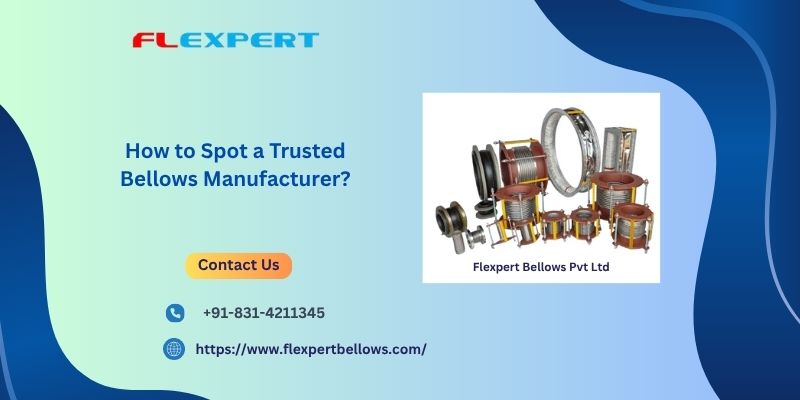
A reliable Bellows Expansion Joints Manufacturer does much more than fabricate metal bellows. The right manufacturer understands how temperature, pressure, movement, materials, and installation conditions interact inside a working system. That engineering understanding is often what separates a trouble-free installation from an expensive maintenance headache.
Engineering Comes Before Manufacturing
A good expansion joint is not simply selected by size. It needs to suit the actual operating environment. A manufacturer should be willing to understand the application before recommending a design.
Look for application-specific expertise
Before production begins, experienced manufacturers typically consider factors such as operating temperature, pressure, axial movement, lateral movement, vibration, pipe size, media, and installation conditions. These details influence the bellows geometry, material selection, number of convolutions, and overall construction.
Think of it like choosing tyres for a vehicle. A tyre designed for a city car may physically fit another vehicle, but that does not mean it is the right choice for heavy loads or demanding terrain. Expansion joints work in much the same way: suitability matters more than appearance.
Material Selection Should Never Be an Afterthought
Metal bellows operate in environments where corrosion, heat and mechanical cycling can gradually affect performance. Stainless steel is widely used in expansion-joint construction, but the appropriate grade depends on the application and process conditions.
A dependable expansion joints manufacturer should be able to explain why a particular material is being proposed rather than simply offering whichever option happens to be readily available.
- Temperature: High-temperature service may demand careful material and design selection.
- Corrosion: The process medium and surrounding environment can influence material compatibility.
- Fatigue: Repeated movement makes durability and cycle life important considerations.
- Fabrication: Welding and forming processes must be compatible with the selected material.
That kind of discussion is a positive sign. It shows the manufacturer is thinking about service life, not just the initial order.
Quality Control Is Where Reliability Shows
Manufacturing precision matters enormously when a component is expected to absorb movement while remaining pressure-tight. Small inconsistencies in forming, welding, dimensions, or inspection can become significant once the joint is operating continuously.
Ask potential suppliers about their inspection and testing procedures. Depending on the application, these may include dimensional checks, weld inspection, leak testing, pressure testing, and other quality-control measures.
Industry guidance also highlights the importance of properly engineered expansion joints and installation practices. The American Society of Mechanical Engineers (ASME) develops widely used engineering codes and standards for pressure-related equipment and systems, making standards awareness an important consideration when evaluating suppliers.
Customization Can Make a Major Difference
Industrial piping rarely follows a one-size-fits-all pattern. Two systems may have identical pipe diameters but completely different operating conditions. That is why customization capability can be a useful indicator of manufacturing competence.
Experienced manufacturers may design solutions around specific movement requirements, connection types, dimensions, materials, or space limitations. In demanding applications, Bellows Expansion Joints should be treated as engineered components rather than generic accessories.
Questions worth asking before placing an order
- Can the manufacturer review drawings and operating conditions?
- Can they recommend materials based on temperature and media?
- What testing and inspection procedures are followed?
- Can the design accommodate the required movement and cycle conditions?
- Will technical documentation be supplied with the finished product?
These questions can reveal quite a lot. A manufacturer that is comfortable discussing technical details will usually be better prepared to handle unusual or demanding applications.
Installation Support Matters Too
Even a well-designed expansion joint can perform poorly if the surrounding piping system is not properly supported. Anchors, guides, alignment, and installation practices all influence how movement reaches the joint.
For example, anchors help control where thermal movement occurs in a piping system. Understanding Why Install Anchors Close to Metal Compensators? can help engineers and installers avoid transferring unwanted forces to areas that were not designed to handle them.
A manufacturer that provides installation guidance, drawings, technical documentation, and after-sales assistance adds value beyond the physical product. In the real world, that support can save considerable time when a project moves from the drawing board to the plant floor.
What Sets a Dependable Manufacturer Apart?
Price naturally matters when purchasing industrial components. Still, the lowest quotation is not automatically the lowest-cost solution. A poorly selected expansion joint may lead to premature replacement, production interruptions, inspection work, and additional installation expenses.
- Technical understanding: The supplier asks the right questions before quoting.
- Consistent manufacturing: Production processes are controlled and repeatable.
- Transparent documentation: Specifications, drawings, test information, and material details are clearly communicated.
- Responsive support: Engineers can get practical answers when questions arise.
- Application experience: The manufacturer understands how products behave in real operating environments.
In short, reliability comes from the complete process—not from the bellows alone.
Frequently Asked Questions
What should I consider when choosing a bellows expansion joint manufacturer?
Consider engineering experience, material expertise, customization capability, quality-control procedures, testing facilities, documentation, and technical support. The manufacturer’s understanding of your actual operating conditions is particularly important.
Why is material selection important for expansion joints?
Material selection affects corrosion resistance, temperature capability, durability, and service performance. The correct material should be chosen according to the process medium and operating environment rather than simply based on availability or cost.
Can expansion joints be customized for specific applications?
Yes. Depending on the manufacturer and application, expansion joints can be engineered around factors such as pipe size, movement requirements, pressure, temperature, materials, connection configuration, and installation limitations.
Does installation affect the performance of an expansion joint?
Absolutely. Incorrect alignment, inadequate anchoring, poor piping support, or unsuitable guides can place additional loads on an expansion joint. Proper installation is therefore an important part of achieving dependable service.
Final Thoughts
Choosing a reliable bellows expansion joints manufacturer is ultimately about looking beyond the catalogue and asking how the supplier approaches engineering, quality, customization, testing, and support. A manufacturer that understands the complete application can help turn an expansion joint from a simple purchased component into a dependable part of the piping system.
When reliability matters, the best starting point is simple: ask questions, examine the manufacturer’s technical capabilities, and make sure the proposed solution is designed for the conditions it will actually face.
Full Audio Version: Click Here