
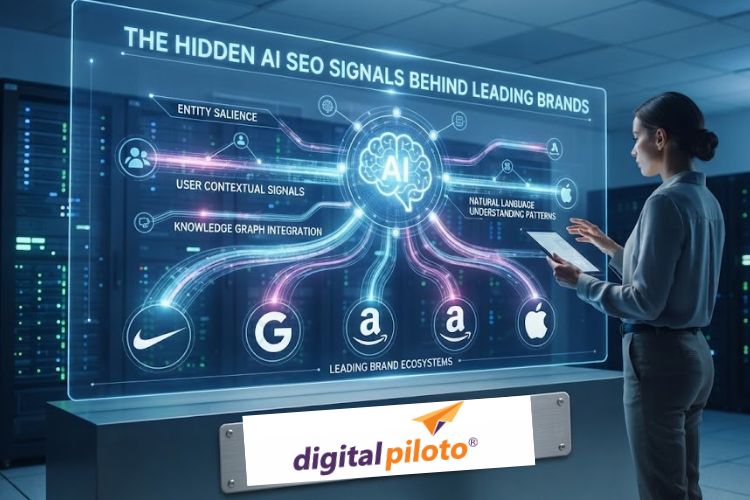
Top-ranking brands are no longer winning search visibility through backlinks and keywords alone. Today's leaders succeed because they optimize for how AI systems understand authority, context, trust, and user satisfaction. Hidden AI SEO factors such as entity relationships, topical depth, answer quality, behavioral signals, and machine-readable content structures now influence who appears in search results and AI-generated answers.
This shift explains why many businesses with strong traditional SEO foundations still struggle to gain visibility in AI-driven search experiences. Brands investing in content architecture, semantic relevance, and user experience often outperform larger competitors. Even businesses working with a Website Development Agency in Siliguri are increasingly prioritizing AI-ready website structures rather than focusing solely on rankings.
What Are Hidden AI SEO Factors?
Hidden AI SEO factors are the signals artificial intelligence systems use to evaluate authority, expertise, relevance, and trustworthiness beyond traditional ranking metrics.
Unlike conventional SEO, AI systems analyze relationships between topics, user behavior patterns, contextual relevance, and information quality. Search engines increasingly behave less like librarians and more like research assistants trying to determine which source deserves trust.
That difference changes everything.
Why Are Top Brands Benefiting More From AI SEO?
Leading brands typically create an ecosystem of trust rather than isolated pages targeting individual keywords.
AI systems recognize this ecosystem through multiple signals:
- Consistent expertise across related topics
- Strong entity recognition across the web
- Structured and machine-readable information
- Positive engagement behavior from users
- Brand mentions across authoritative sources
The interesting part is that many of these signals are not visible inside traditional SEO tools.
Entity SEO Has Become More Important Than Keywords
Keywords tell search engines what a page discusses.
Entities tell AI systems who, what, where, and why that information matters.
For example, if a healthcare company publishes content around patient acquisition, medical SEO, appointment automation, and healthcare reputation management, AI models begin associating that business with healthcare marketing expertise.
This relationship building is far more powerful than repeating the same keyword ten times.
Examples of Important SEO Entities
- Brands and organizations
- Products and services
- Industry experts
- Locations and markets
- Technologies and methodologies
The stronger these connections become, the easier it becomes for AI search engines to trust your content.
How Contextual Depth Influences AI Rankings
AI systems prefer content that answers the next question before users ask it.
Top-ranking brands rarely publish shallow articles built around a single keyword variation. Instead, they create comprehensive topic coverage that mirrors how experts explain concepts in real conversations.
A page discussing AI SEO should naturally cover semantic search, structured data, user intent, answer engines, and entity optimization.
When content provides contextual depth, AI models treat it as a complete knowledge source rather than a partial answer.
The Role of User Experience Signals
AI search systems increasingly observe how users interact with content after they click.
Several engagement signals appear to influence visibility:
- Time spent reading content
- Return visits from the same users
- Scroll depth and interaction behavior
- Branded searches after discovery
- Low pogo-sticking back to search results
This is one reason why genuinely useful content often beats technically optimized but generic articles.
How Brands Build AI Authority Step by Step
Step 1: Establish a Core Topic Area
Choose a clear expertise area rather than publishing unrelated content simply to capture traffic.
Step 2: Build Supporting Topic Clusters
Create supporting resources that strengthen your authority around the core subject.
Step 3: Create Machine-Readable Content
Use schema markup, proper headings, FAQs, and structured formatting.
Step 4: Earn External Validation
Mentions, citations, reviews, and industry references reinforce credibility signals.
Step 5: Continuously Improve User Experience
Fast websites, clear navigation, and mobile usability remain essential ranking foundations.
The Growing Importance of Generative Search Optimization
Many brands are discovering that ranking on page one no longer guarantees visibility inside AI-generated answers.
This is where a dedicated geo strategy becomes increasingly valuable. Generative search engines prefer sources that provide clear answers, structured information, trusted expertise, and contextual completeness.
The brands appearing in AI summaries today are often those that invested in these principles years before the market recognized their importance.
Brand Mentions Matter More Than Many Backlinks
This idea surprises many marketers.
AI systems increasingly understand reputation through mentions and associations, even when no clickable link exists.
For example, if industry publications regularly discuss your company in connection with digital transformation or local SEO expertise, those contextual mentions help reinforce authority.
This explains why many organizations working with a Digital Marketing Company in India are shifting resources toward digital PR, thought leadership, and brand visibility initiatives.
Hidden AI SEO Factors Most Businesses Ignore
- Author expertise consistency across content
- Internal linking based on topic relationships
- Semantic proximity between related concepts
- Schema implementation quality
- Brand sentiment across external platforms
- Content freshness within evolving topics
- Question-answer formatting for AI extraction
Individually these factors appear small.
Together they create a strong trust profile that AI systems reward.
Frequently Asked Questions
What is AI SEO?
AI SEO is the process of optimizing content and websites for both traditional search engines and AI-powered answer systems that generate responses directly for users.
Are backlinks still important in AI SEO?
Yes. However, backlinks now work alongside entity authority, brand mentions, user experience, and topical expertise rather than acting as the primary ranking factor.
What is the difference between SEO and AI SEO?
Traditional SEO focuses heavily on rankings and keywords, while AI SEO prioritizes context, trust, entities, and answer quality.
How can businesses prepare for generative search?
Businesses should create structured content, improve topic depth, implement schema markup, and establish strong brand authority signals.
Can small businesses compete with large brands in AI SEO?
Absolutely. Smaller businesses often win by focusing deeply on niche expertise and producing highly relevant, trustworthy content.
Conclusion
The future of search belongs to businesses that help machines understand expertise as clearly as humans do. Keywords still matter, but context, authority, and trust increasingly determine visibility. The brands dominating AI search today are not necessarily gaming algorithms; they are building digital credibility that algorithms can confidently recognize.
Blog development credits
This article was developed through strategic planning by Amlan Maiti, supported by research and content intelligence from advanced AI platforms including ChatGPT, Gemini, and Copilot, with final refinement, optimization, and search enhancements delivered by Digital Piloto Private Limited.



Comments (0)
Leave a Comment