Every industrial piping system tells a story. It moves steam, chemicals, water, gases, or other process media through demanding environments where pressure and temperature constantly change. Without the right flexibility, even a well-designed pipeline can develop stress over time. That’s why understanding how expansion solutions work is essential for business owners looking to improve safety, reduce maintenance, and protect valuable equipment.
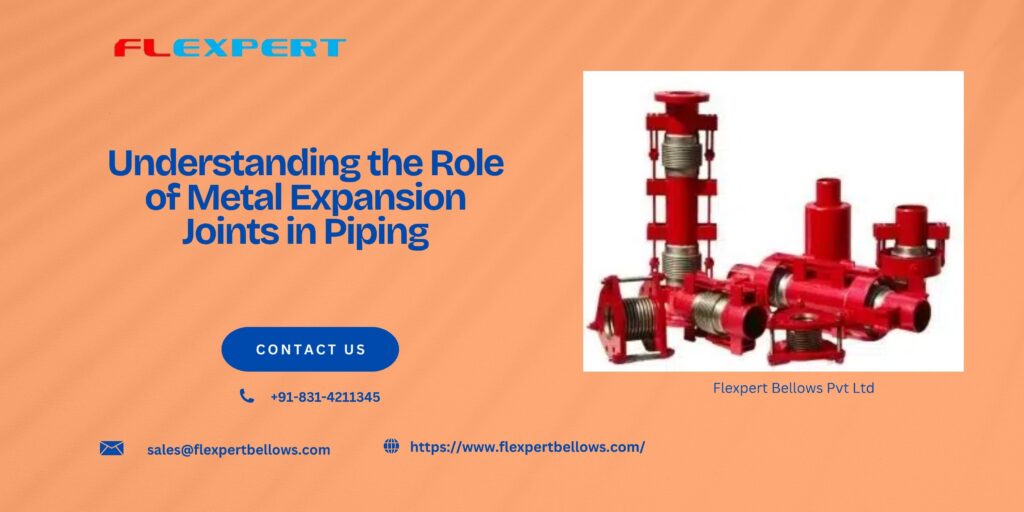
At Flexpert Bellows, engineered Metal Expansion Joints help absorb movement, minimize vibration, and extend the service life of industrial piping systems. Whether you’re operating a manufacturing facility, commercial plant, or processing unit, choosing the right expansion joint can significantly improve long-term reliability while reducing unexpected downtime.
What Are Metal Expansion Joints?
Metal expansion joints are specially engineered flexible connectors installed within piping systems to compensate for thermal expansion, vibration, pressure fluctuations, and slight misalignment. As pipelines heat up and cool down, they naturally expand and contract. Without a flexible component to absorb these movements, excessive stress transfers directly to pipes, pumps, valves, and connected equipment.
Think of them as the suspension system of an industrial pipeline. Just as vehicle suspension protects passengers from rough roads, expansion joints cushion a piping network from continuous mechanical stress.
Why They Play Such a Critical Role in Piping Systems?
1. Absorb Thermal Expansion
Temperature variations remain one of the biggest challenges in industrial operations. Steam lines, chemical plants, power stations, and HVAC systems experience constant expansion and contraction. Properly designed expansion joints accommodate this movement without damaging connected equipment.
2. Reduce Vibration and Mechanical Stress
Pumps, compressors, turbines, and rotating machinery generate vibration that travels through pipelines. Left unchecked, vibration accelerates wear and increases maintenance costs. Expansion joints isolate much of this movement before it affects surrounding components.
3. Protect Equipment Investments
Replacing damaged valves, pumps, or heat exchangers is far more expensive than preventing failure in the first place. Flexible piping components reduce stress loads, helping expensive equipment operate efficiently for longer periods.
Industries That Depend on Metal Expansion Joints
Although nearly every industrial sector uses piping, certain industries rely heavily on expansion joints because of demanding operating conditions.
- Power generation where high-temperature steam lines require continuous movement compensation.
- Chemical processing plants handling aggressive media and fluctuating temperatures.
- Oil and gas facilities operating under high pressure and varying environmental conditions.
- HVAC systems that experience seasonal thermal movement.
- Food and pharmaceutical manufacturing where system reliability directly impacts production schedules.
According to guidance published by the U.S. Department of Energy, improving industrial system efficiency through proper equipment design can significantly reduce energy waste while improving operational reliability.
Choosing the Right Expansion Solution
Not every application requires the same design. Factors such as operating pressure, movement requirements, temperature range, installation space, and media compatibility all influence the ideal solution.
In many demanding applications, engineers choose metal expasion bellows because of their ability to handle high temperatures while maintaining flexibility and structural integrity. Selecting the proper material and construction ensures consistent performance throughout the equipment’s service life.
Expert Considerations Before Installation
- Measure expected thermal movement instead of estimating.
- Verify pressure ratings under actual operating conditions.
- Allow sufficient installation space for movement.
- Inspect anchors and pipe supports before commissioning.
- Schedule routine inspections to identify early signs of wear.
Experienced maintenance teams understand that preventive inspection almost always costs less than emergency replacement.
Common Mistakes Businesses Should Avoid
- Selecting joints based solely on purchase price.
- Ignoring thermal expansion calculations.
- Installing without proper anchors or guides.
- Skipping routine inspection schedules.
- Using incorrect materials for corrosive environments.
Many unexpected failures result from installation errors or improper application rather than manufacturing defects. Understanding the 3 Common Causes Leading to Metallic Bellow Joint Failure can help maintenance teams prevent expensive downtime and improve overall system performance.
Supporting Reliability with Smart Engineering
Research from the American Society of Mechanical Engineers (ASME) emphasizes that proper piping design, stress management, and routine maintenance significantly improve equipment reliability and operational safety. Businesses that invest in engineered piping components often experience fewer breakdowns and lower lifecycle costs compared to reactive maintenance approaches.
Frequently Asked Questions
What is the primary purpose of a metal expansion joint?
Its primary role is to absorb thermal expansion, vibration, pressure fluctuations, and minor pipe misalignment while protecting connected equipment.
How long do metal expansion joints typically last?
Service life depends on operating conditions, installation quality, maintenance, pressure, temperature, and media compatibility. Properly selected joints can perform reliably for many years.
Can expansion joints improve energy efficiency?
Indirectly, yes. By reducing stress, preventing leaks, and supporting efficient equipment operation, they contribute to improved overall system performance.
How often should expansion joints be inspected?
Routine visual inspections should be included in scheduled maintenance programs, with detailed inspections performed according to operating conditions and manufacturer recommendations.
Final Thoughts
Reliable piping systems don’t happen by chance—they’re built through thoughtful engineering and quality components. For businesses aiming to maximize uptime, protect equipment, and reduce maintenance costs, investing in well-designed metal expansion joints is a practical long-term decision. Flexpert Bellows continues to support industries with engineered solutions that deliver dependable performance in demanding environments.
Full Audio Version: Click Here