In industrial operations, small components often carry the biggest responsibility. Exhaust systems are a perfect example. They constantly deal with heat, pressure, vibration, and movement. When one weak component fails, the entire system can suffer—from costly downtime to safety risks. That’s exactly why choosing the right expansion joint matters more than many business owners realize.
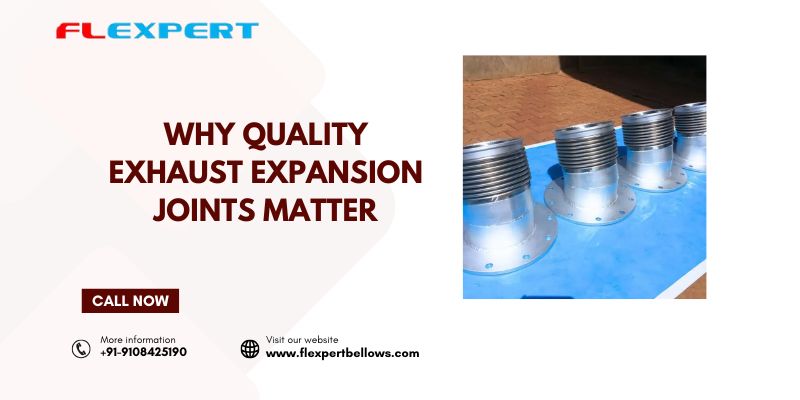
At Flexpert Bellows, durability and engineering precision are at the core of every solution. A trusted Exhaust Expansion Joints Manufacturer helps industries reduce mechanical stress, improve exhaust flow, and extend equipment life. Whether you manage a manufacturing unit, marine engine setup, generator system, or commercial plant, quality joints directly affect performance.
What Does an Exhaust Expansion Joint Actually Do?
Think of an exhaust system like a busy highway. Exhaust gases travel rapidly while the pipes themselves expand and contract due to extreme temperatures. Without flexibility, stress builds up at fixed points, eventually causing cracks, leaks, or structural failure.
Exhaust expansion joints absorb this movement. They compensate for:
- Thermal expansion caused by high operating temperatures
- Mechanical vibration from engines and rotating equipment
- Misalignment during installation or operation
According to the Occupational Safety and Health Administration (OSHA), poorly maintained industrial systems increase workplace hazards through leaks and pressure-related failures. Preventive component selection plays a major role in risk reduction.
Why Quality Makes All the Difference?
Not all expansion joints are built the same. On paper, two products may look similar. In real operating conditions? The difference becomes obvious very quickly.
1. Better Heat Resistance
Exhaust systems in diesel engines, boilers, and heavy machinery routinely face temperatures exceeding 500°C. Low-grade materials fatigue faster under repeated heat cycles.
High-quality stainless steel bellows, on the other hand, maintain flexibility even under prolonged exposure to extreme heat. That means fewer replacements and more predictable performance.
2. Reduced Downtime
Downtime is expensive—sometimes painfully so. Even a few hours of halted production can impact deliveries, contracts, and revenue.
Quality expansion joints reduce failures caused by:
- Bellows cracking
- Exhaust leakage
- Weld separation
- Pressure fatigue
For B2B operators, this translates directly into operational stability.
3. Improved Equipment Lifespan
Vibration doesn’t only damage joints—it damages connected equipment too. Pumps, turbines, generators, and engines all experience stress transfer through rigid exhaust connections.
A properly engineered joint acts like a shock absorber. It protects the surrounding infrastructure from unnecessary strain.
Common Problems Caused by Poor-Quality Joints
Sometimes business owners choose cheaper components to cut initial costs. It feels practical at first. Unfortunately, the long-term cost is often much higher.
Here are common issues caused by inferior products:
- Frequent maintenance shutdowns
- Noise and vibration increases
- Premature corrosion
- Exhaust gas leakage
- Safety compliance issues
The U.S. Department of Energy notes that improving industrial system reliability significantly reduces operating costs and energy waste. Learn more at energy.gov.
Why Custom Engineering Matters?
No two industrial systems are exactly alike. Pipe diameters vary. Pressure conditions vary. Movement ranges differ. That’s why custom design often outperforms generic solutions.
A reliable Exhaust Pipe Bellows Expansion Joints Manufacturer considers several technical factors before production:
- Operating pressure
- Temperature range
- Axial/lateral movement
- Media compatibility
- Installation space
That engineering approach ensures long-term reliability instead of short-term fixes.
Quality Impacts Safety Too
Here’s something many people overlook: expansion joints are not just performance components—they’re safety components.
A failed joint can release hot gases, harmful fumes, or pressure bursts into work environments. That creates obvious risks for staff, machinery, and nearby infrastructure.
If you want deeper technical insights, read How Metallic Exhaust Bellows Enhance Security and Efficiency?. It highlights how advanced bellows design improves both operational safety and system efficiency.
How to Identify a Reliable Manufacturer?
Before buying, ask these practical questions:
- What material grades are used?
- Are products pressure-tested?
- Can they handle custom requirements?
- Do they offer technical support?
Experienced manufacturers don’t simply sell products—they solve engineering challenges.
FAQs
1. How long do exhaust expansion joints last?
High-quality exhaust expansion joints can last several years depending on temperature, pressure, vibration, and maintenance conditions.
2. Can expansion joints reduce vibration?
Yes. They absorb movement and vibration, protecting pipes and connected machinery from stress damage.
3. Which material is best for exhaust bellows?
Stainless steel is commonly preferred because of its heat resistance, corrosion resistance, and durability.
4. Are custom expansion joints worth the investment?
Absolutely. Custom joints fit specific operational requirements, improving efficiency and reducing failure risk.
Final Thoughts
Quality exhaust expansion joints may seem like a small investment, but their impact is enormous. They protect equipment, improve safety, reduce downtime, and lower long-term operating costs. For both B2B and B2C business owners, choosing a high-quality solution isn’t just smart engineering—it’s smart business.
Full Audio Version: Click Here