
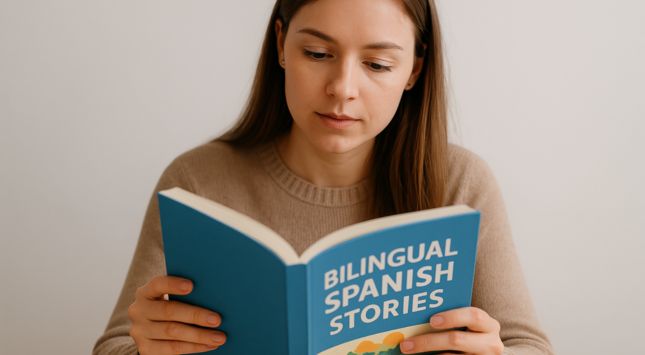
Ever wondered why some people seem to pick up new languages effortlessly while others feel stuck memorizing rules? The secret often lies in the kind of input they consume—and bilingual stories are one of the most effective tools. In fact, many learners now rely on bilingual Spanish English stories to strengthen vocabulary, improve fluency, and actually enjoy the learning process.
Whether you’re learning Spanish for travel, work, or pure curiosity, bilingual stories offer a gentle but powerful way to absorb the language. They give you two languages side by side, helping your brain connect patterns, emotions, and meaning without constant translation.
Why Bilingual Stories Work So Well
Reading bilingual narratives is like giving your brain a friendly nudge instead of forcing it through a grammar boot camp. According to a study summarized by the U.S. Department of Education (ies.ed.gov), learners exposed to structured reading activities develop stronger comprehension and retention skills. When a story appears in two languages, the effect becomes even more pronounced.
Here’s why this learning method is so effective:
- Context-rich learning: Your brain recalls words better when tied to emotions, characters, and stories.
- Reduced overwhelm: You can cross-check meanings instantly without breaking flow.
- Real, everyday language: Stories show you how Spanish is used naturally—not just in textbooks.
Also Read: Why Stories Work for Language Learning
Top Spanish–English Bilingual Stories Worth Reading
1. Short Story Collections for Beginners
Short collections are perfect if you’re at the early stages of language learning. They offer digestible chunks without losing rhythm. Many beginners love mini-stories that mix daily-life scenarios with simple dialogue. It’s a comfortable balance—enough challenge to grow, but not so much that you feel lost.
- “Easy Spanish Reader”– Excellent for gradual progression.
- First-person mini-stories that feel conversational and relatable.
- Dialogue-heavy stories for improving real-life speaking patterns.
2. Folk Tales and Cultural Classics
Traditional tales introduce you to Hispanic culture, values, and storytelling traditions. These stories often use universal themes—friendship, courage, cleverness—which makes comprehension easier even if your Spanish isn’t strong yet. A popular example is “La Cucarachita Martina,” a tender folk tale told across Latin America.
3. Dual-Language Modern Fiction
For intermediate readers, modern bilingual fiction offers smoother writing, contemporary vocabulary, and immersive emotional appeal. Many learners enjoy reading chapters first in English, then again in Spanish to reinforce understanding. Some authors even alternate languages naturally within the storyline, creating an engaging rhythm.
If you’re looking for the fastest way to learn Spanish beyond typical grammar drills, dual-language fiction can boost confidence remarkably fast.
How to Choose the Right Bilingual Story for Your Level
Choosing the right book matters more than most people think. Too easy, and you won’t grow. Too difficult, and you’ll end up avoiding the book altogether. Consider these factors when picking your next read:
- Language Level: Beginner-friendly stories have short sentences and familiar vocabulary.
- Format: Side-by-side bilingual pages make learning faster.
- Genre Preference: Whether you like romance, mystery, or folk tales—interest fuels consistency.
A well-chosen story becomes more than a learning resource; it becomes a companion on your language journey. Readers often find themselves naturally absorbing new grammar rules without even noticing. It’s immersive learning disguised as enjoyment—arguably the best kind.
Benefits Beyond Vocabulary
While enhanced vocabulary is the obvious outcome, bilingual stories also improve pronunciation (when paired with audio), cultural awareness, and contextual comprehension. According to the American Council on the Teaching of Foreign Languages (ACTFL.org), context-based learning significantly boosts long-term retention and fluency.
Additionally, Spanish–English bilingual reading helps you:
- Recognize grammar patterns without memorizing charts.
- Develop a more intuitive understanding of sentence flow.
- Learn naturally through exposure rather than pressure.
Frequently Asked Questions
1. Are bilingual Spanish–English stories good for complete beginners?
Yes. Beginners benefit greatly because they can rely on the English text while slowly absorbing Spanish structures and vocabulary.
2. How many minutes a day should I read to see progress?
Even 10–15 minutes daily can create noticeable improvement within a few weeks, especially when combined with listening practice.
3. Can bilingual stories replace formal Spanish lessons?
They complement lessons beautifully but aren’t a full replacement. Think of them as the “fun side” of language learning that builds intuition and confidence.
4. What type of bilingual stories are best for intermediate learners?
Modern fiction and dialogue-rich stories tend to work best, as they introduce real-life expressions and more advanced vocabulary.
Final Thoughts
Bilingual stories are more than just reading material—they’re a bridge between two languages, two cultures, and two ways of thinking. If you want a gentle but effective way to improve your Spanish, these stories provide a learning experience that feels less like studying and more like discovering.
Also Read: Beginner-Friendly Tales to Boost Your Spanish
Blog Development Credits
This blog was a team effort fueled by smart ideas. Dual Language Stories picked the topic. Most content was crafted using tools like ChatGPT and Google Gemini. The Digital Piloto team polished and optimized the blog to ensure it’s clear, engaging, and SEO-friendly.