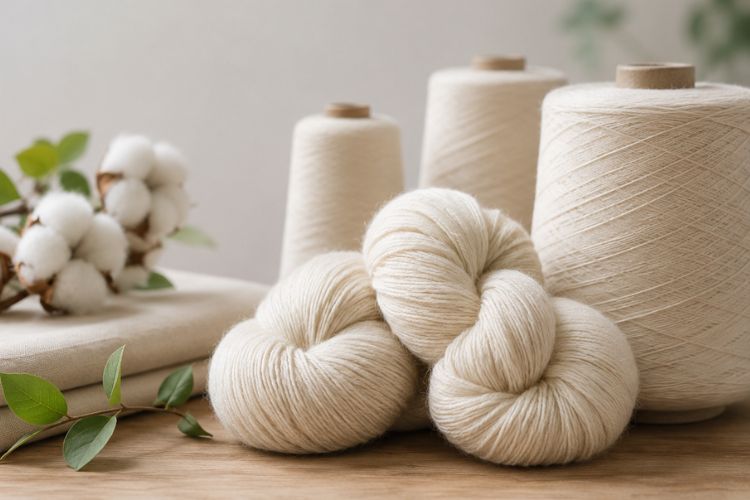
The Indian textile industry is changing fast, and honestly, it’s about time. Buyers across the globe are no longer impressed by mass production alone—they want traceability, eco-conscious sourcing, and materials that feel responsible from farm to fabric. That shift has pushed every serious Organic Yarn Supplier to rethink quality, sustainability, and innovation for 2026 and beyond.
From organic cotton spinning units in Tamil Nadu to recycled fiber innovators in Gujarat, India is becoming a preferred sourcing destination for sustainable textile materials. According to the Textiles Committee, Government of India, global demand for eco-friendly textile inputs has continued rising as brands prioritize ethical manufacturing and low-impact production practices.
Also Read: Is it Easy to Come Up with Conventional Textile Designs
Why Organic Yarn Is Gaining Momentum
A decade ago, organic yarn was considered niche—something limited to boutique clothing labels and environmentally driven startups. Today, it sits at the center of mainstream fashion discussions. International brands are actively looking for suppliers that can provide certified yarn with consistent quality and transparent sourcing.
The reason is fairly straightforward. Organic yarn reduces chemical exposure during farming, supports healthier soil conditions, and often consumes less water during production cycles. Consumers may not always read fiber labels carefully, but they absolutely notice when brands promote sustainability with credibility.
What Buyers Are Looking for in 2026
- Traceable sourcing: Buyers increasingly request certification and farm-level transparency before finalizing contracts.
- Blended innovation: Organic cotton mixed with bamboo, hemp, or recycled fibers is becoming commercially attractive.
- Consistency at scale: Small eco-friendly batches are no longer enough. Exporters must deliver large volumes without compromising quality.
Top Qualities of Leading Organic Yarn Suppliers
Not every manufacturer can adapt to modern textile expectations. The strongest suppliers in India are the ones balancing sustainability with commercial practicality. That combination is surprisingly difficult to achieve.
Many leading yarn exporters are investing in automated spinning systems, renewable energy usage, and wastewater management. According to the World Bank, sustainable manufacturing investments are increasingly influencing global sourcing decisions across textile supply chains.
Characteristics That Set Suppliers Apart
- Global certifications: GOTS and OEKO-TEX certifications remain major trust signals for international buyers.
- Flexible production: Suppliers capable of producing customized yarn counts often win long-term partnerships.
- Reliable export networks: Timely delivery matters just as much as sustainability claims.
- Eco-conscious infrastructure: Solar-powered operations and low-emission processing facilities are becoming competitive advantages.
India’s Key Regions for Sustainable Yarn Production
Tamil Nadu continues to dominate India’s spinning industry, particularly for organic cotton yarn manufacturing. Cities like Coimbatore and Tiruppur remain highly influential because they combine skilled labor, modern machinery, and strong export ecosystems.
Meanwhile, Gujarat is rapidly expanding its footprint in recycled textile fibers and eco-conscious manufacturing. Punjab and Maharashtra are also seeing steady growth in sustainable textile production due to rising export demand and government-backed industrial initiatives.
Interestingly, many yarn manufacturers are also collaborating with Organic Fabric Suppliers in India to create vertically integrated textile solutions. That partnership helps apparel brands simplify sourcing while ensuring better quality consistency across the production chain.
Emerging Trends Shaping the Industry in 2026
The conversation around sustainable textiles has evolved beyond organic cotton alone. Buyers now want innovation layered on top of sustainability. And honestly, suppliers that fail to adapt may struggle within the next few years.
Key Industry Trends to Watch
- Recycled yarn blends: Combining recycled polyester with natural fibers is becoming commercially viable.
- Low-impact dyeing: Water-saving dye technologies are attracting international sourcing houses.
- AI-driven quality control: Textile mills are increasingly using automation to reduce waste and improve consistency.
- Demand for sustainable textile manufacturers: Ethical sourcing is now part of brand storytelling, not just procurement.
A report from the McKinsey & Company fashion insights division noted that sustainability-focused consumers continue influencing apparel purchasing decisions worldwide, especially among younger demographics.
How Businesses Can Choose the Right Supplier
Finding a supplier is easy. Finding the right supplier? That takes patience. Smart businesses typically avoid making decisions based solely on pricing because hidden inconsistencies often appear later—uneven yarn strength, shipment delays, or poor certification compliance.
Instead, experienced buyers usually request sample lots, audit certifications carefully, and evaluate communication responsiveness before signing long-term agreements. A supplier’s willingness to discuss production transparency often says more than a glossy brochure ever could.
Frequently Asked Questions
What is organic yarn made from?
Organic yarn is generally produced from fibers grown without harmful synthetic pesticides or chemical fertilizers. Organic cotton remains the most common raw material.
Why are Indian yarn exporters popular globally?
India offers a strong combination of manufacturing scale, competitive pricing, skilled textile expertise, and expanding sustainability practices, making it highly attractive to international buyers.
Are sustainable textile manufacturers more expensive?
Initially, sustainable production may cost slightly more. However, many brands find long-term value through improved quality perception, stronger customer trust, and compliance with evolving global regulations.
What certifications should buyers check before sourcing yarn?
GOTS, OEKO-TEX, and ISO certifications are among the most recognized quality and sustainability standards buyers should verify before purchasing organic yarn.
Also Read: Best Cotton Yarn Traders for Quality Supply
Final Thoughts
India’s organic yarn sector is no longer operating quietly in the background. It is shaping the future of sustainable fashion and responsible textile sourcing at a global level. As 2026 approaches, suppliers focused on transparency, innovation, and ethical manufacturing will likely define the next chapter of the textile industry.
Blog Development Credits
This article was independently planned and refined with research-backed insights, AI-assisted drafting tools, and detailed SEO polishing support provided through Square Corporation for enhanced readability and digital performance.