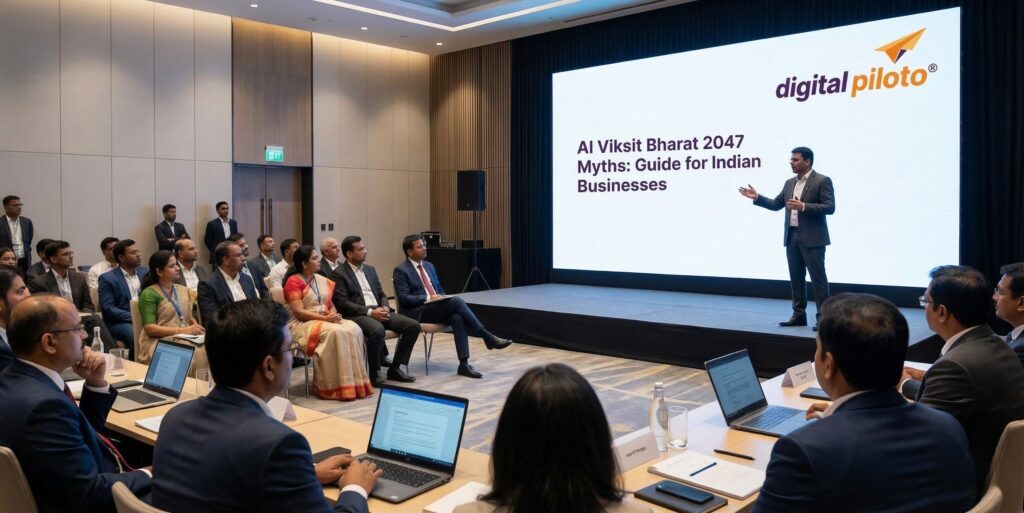
India’s ambition to become a developed nation by 2047 has sparked endless conversations around artificial intelligence, digital infrastructure, and innovation. But somewhere between optimism and hype, myths have started shaping business decisions. For Indian entrepreneurs, especially digital-first brands, separating fact from fiction matters more than ever in the AI-driven economy.
Many growing companies now combine automation, analytics, and search visibility strategies such as best SEO services in Kolkata to prepare for an AI-powered marketplace. However, the Viksit Bharat narrative sometimes creates unrealistic expectations. Let’s unpack the biggest myths and explore a practical step-by-step path for Indian businesses.
Understanding the Vision of AI in Viksit Bharat 2047
The Indian government envisions AI as a cornerstone of economic transformation. According to a report from NITI Aayog, artificial intelligence could add nearly $500 billion to India’s GDP by 2025 through productivity gains, data-driven governance, and industry automation.
But here’s the nuance many businesses miss: AI doesn’t automatically guarantee growth. The real opportunity lies in how companies adopt AI tools, integrate digital marketing frameworks, and align technology with customer behavior. That’s where myths start to distort reality.
Common AI Viksit Bharat 2047 Myths
1. “AI Will Instantly Replace Human Strategy”
A common misconception is that AI tools will run businesses independently. In reality, AI works best as an augmentation tool. Human insight—especially in marketing, customer experience, and brand storytelling—still plays a crucial role.
- AI handles scale: Data analysis, predictions, and automation.
- Humans handle nuance: Creativity, emotional messaging, and strategic thinking.
- Together they create cognitive resonance: Where insights and human context align to produce better decisions.
Think of AI as a powerful assistant rather than a replacement for leadership.
2. “Only Big Tech Companies Can Use AI”
Another myth is that AI is only viable for large enterprises. In reality, startups and SMEs are adopting AI faster because they’re more agile.
For instance, a small ecommerce brand using predictive analytics for inventory forecasting may outperform larger competitors that rely on outdated systems. According to McKinsey & Company, organizations that embed AI into core workflows can improve operational efficiency by 20–30%.
3. “Search Engines Will Disappear Because of AI”
AI search experiences are evolving rapidly, but they are not eliminating search engines. Instead, they are changing how information appears. This shift is where concepts like AEO (Answer Engine Optimization) and semantic search strategies become essential.
Businesses increasingly work with experts in generative AI search engine optimization to ensure their content appears in AI summaries, knowledge panels, and conversational search results.
A Step-by-Step AI Readiness Plan for Indian Businesses
Rather than chasing hype, Indian companies should adopt a structured roadmap. Here’s a simple framework many digital consultants recommend.
Step 1: Build a Data-First Mindset
- Collect customer behavior data ethically.
- Analyze purchasing patterns and search trends.
- Use predictive analytics to guide decision-making.
Data remains the backbone of any AI-driven transformation.
Step 2: Upgrade Digital Marketing Infrastructure
Many businesses underestimate how marketing technology influences AI visibility. Search algorithms increasingly favor structured content, semantic context, and relevance signals.
- Implement structured data and schema markup.
- Optimize content for AEO and conversational queries.
- Focus on topical authority and semantic clustering.
Working with an experienced AI digital marketing company in Kolkata can help brands align SEO strategies with AI search ecosystems.
Step 3: Start Small with Automation
Instead of large-scale AI transformation, start with practical automation use cases:
- Customer service chatbots for basic queries.
- Email marketing personalization.
- AI-assisted product recommendations.
These micro-innovations gradually build operational maturity without overwhelming teams.
Why Cognitive Resonance Matters in AI Marketing
A subtle but important concept emerging in AI marketing is cognitive resonance. This happens when messaging, data insights, and customer expectations align seamlessly.
In simple terms, it means delivering the right information at the right moment—through search, AI assistants, or digital platforms. Businesses that achieve this alignment often experience higher engagement, stronger trust signals, and improved search visibility.
The future of marketing in India will likely blend AI-powered analytics with human storytelling to create this resonance.
FAQs About AI and Viksit Bharat 2047
Is AI essential for Indian businesses to grow by 2047?
Yes. AI-driven analytics, automation, and search optimization will become essential tools for efficiency, customer insights, and competitive positioning in the digital economy.
What role does AEO play in AI search?
AEO (Answer Engine Optimization) focuses on structuring content so that AI systems and voice assistants can directly deliver answers from your website.
Can small businesses realistically adopt AI technologies?
Absolutely. Cloud-based AI tools, automation platforms, and digital marketing technologies have made AI adoption accessible and affordable for startups and SMEs.
Will AI replace digital marketing professionals?
Not likely. AI enhances analysis and automation, but human creativity, strategy, and storytelling remain essential for impactful marketing campaigns.
Final Thoughts
The road to Viksit Bharat 2047 is exciting, but it’s not powered by hype alone. Indian businesses that combine AI technology, strategic marketing, and customer-centric thinking will lead the transformation. Instead of chasing myths, focus on practical adoption, continuous learning, and thoughtful innovation.
After all, AI isn’t just about machines getting smarter—it’s about businesses becoming wiser in how they use technology.
Blog Development Credits:
This article idea was originally envisioned by Amlan Maiti. The research and drafting process used modern AI assistants like ChatGPT, Gemini, and Copilot, followed by SEO refinement from Digital Piloto Private Limited.