
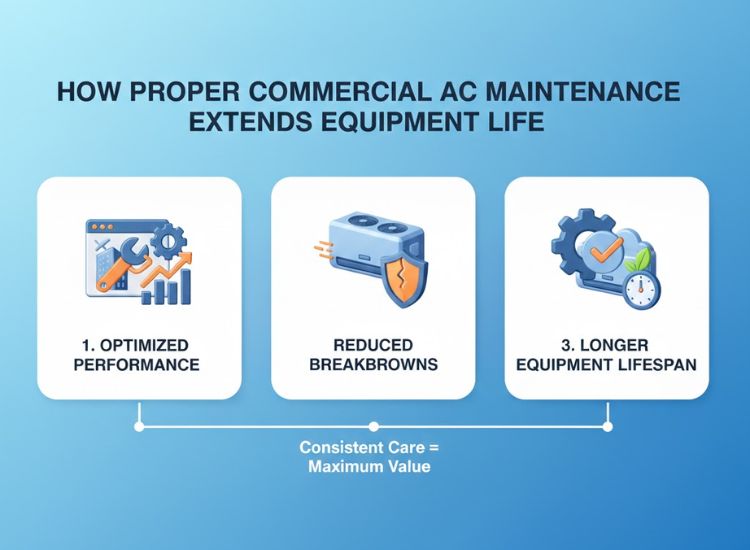
Every business owner knows that a commercial air conditioner is not just another machine—it is the backbone of comfort, productivity, and customer experience. But here’s the real question: why do some AC systems last 15 years while others struggle after seven? The difference is rarely brand alone. It usually comes down to how seriously maintenance is taken.
When business owners talk about Commercial Air Conditioner Maintenance, they often imagine a technician changing filters and leaving. In reality, proper maintenance is more like a long-term fitness plan for your system. It keeps parts aligned, prevents small problems from becoming expensive ones, and ensures your AC ages gracefully instead of burning out early.
Why Maintenance Is Really About Lifespan
Think of your AC system like a delivery truck used every day for business operations. If oil changes and inspections are skipped, the truck still runs—until it suddenly doesn’t. The same logic applies to commercial cooling systems. Dust buildup, loose electrical connections, and worn belts quietly reduce performance and increase internal stress.
According to the U.S. Department of Energy, regular HVAC maintenance can improve efficiency by up to 15%, which also reduces wear on components over time (energy.gov). Less strain equals fewer breakdowns, and fewer breakdowns mean longer equipment life.
How Proper Maintenance Extends Equipment Life
-
It Reduces Mechanical Stress
Dirty coils and clogged filters force compressors and fans to work harder than designed. Over time, this stress leads to overheating and premature failure. Routine cleaning and calibration restore the system to its intended workload, protecting its core parts.
-
It Detects Problems Early
Most catastrophic AC failures begin as tiny issues: a refrigerant leak, a weak capacitor, or a misaligned fan. During preventive HVAC maintenance visits, technicians can spot these red flags before they snowball into system-wide damage.
-
It Maintains Energy Balance
An unmaintained system often runs longer cycles to reach target temperature. That constant overworking shortens lifespan. The Environmental Protection Agency reports that well-maintained HVAC systems use less energy and experience fewer breakdowns.
Maintenance Habits Smart Business Owners Follow
- Scheduled servicing: Not waiting for failures but following a quarterly or biannual plan.
- Airflow management: Keeping vents and ducts clean to reduce internal resistance.
- Load monitoring: Adjusting system settings as business usage changes.
Midway through any smart maintenance strategy, choosing the right partner matters. Many business owners prefer working with a reliable Commercial AC Supplier In Bangalore who understands both installation and lifecycle service. This combination ensures that maintenance aligns with the original system design, which directly affects longevity.
Long-Term Business Benefits of Extended AC Life
- Lower capital replacement costs: Delaying system replacement by even three years saves lakhs in capital expenditure.
- Stable indoor comfort: Fewer breakdowns mean fewer disruptions to staff and customers.
- Predictable budgeting: Maintenance contracts turn sudden repair bills into planned expenses.
Research from ASHRAE suggests that systems under structured HVAC service contracts last significantly longer than those maintained only after breakdowns. The idea is simple: consistency protects complexity.
FAQs
How often should commercial AC systems be serviced?
Most systems benefit from professional servicing every 3–6 months, depending on usage and environment.
Does maintenance really prevent major failures?
Yes. Regular inspections catch minor faults early, preventing them from damaging compressors and motors.
Is preventive HVAC maintenance worth the cost?
Over time, preventive care costs less than emergency repairs and full system replacements.
Can maintenance improve energy efficiency?
Absolutely. Clean components and balanced airflow reduce power consumption and mechanical strain.
Final Thoughts
Commercial AC systems are long-term investments, not disposable assets. With the right care, they reward business owners with years of dependable service. Proper maintenance is not about fixing what is broken—it is about preserving what is working. And in the business world, preservation is often the smartest form of growth.