
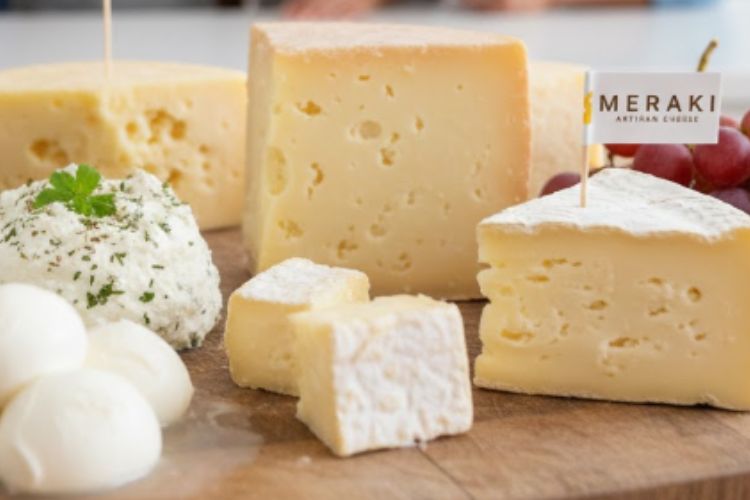
Cheese looks simple—milk, salt, maybe time—but the label can hide very different stories. Some cheeses are slow-made and alive with character, others engineered for shelf life and convenience. If you’ve ever wondered whether natural cheese is truly better than processed cheese, you’re not alone. Let’s unpack the difference without the jargon.
At its heart, Natural unprocessed cheese is about restraint: fewer ingredients, traditional methods, and patience. Processed cheese, on the other hand, is about consistency and speed. Both have their place—but they’re not interchangeable.
What Exactly Is Natural Unprocessed Cheese?
Natural cheese is made using milk, cultures, rennet, and salt—nothing more, nothing clever. The transformation happens through fermentation and aging, not chemical shortcuts. Whether it’s a crumbly cheddar or a soft bloomy wheel, its flavor develops naturally over time.
Because it’s minimally altered, natural cheese often reflects where it was made. Milk quality, animal diet, and even local microbes leave subtle fingerprints. That’s why no two batches taste exactly alike—and honestly, that’s part of the charm.
Key Traits of Natural Cheese
- Short, recognizable ingredient list
- Flavor deepens with aging
- Texture varies from batch to batch
According to the U.S. Department of Agriculture, natural cheeses retain more of milk’s original protein and calcium structure compared to heavily processed varieties (USDA.gov).
So, What Is Processed Cheese Really?
Processed cheese begins its life as natural cheese—but then things change. It’s melted down, blended with emulsifying salts, stabilizers, and sometimes milk solids. The goal? A uniform texture that melts perfectly every single time.
This engineering makes processed cheese incredibly predictable. It won’t split, sweat, or surprise you. That’s useful in fast food kitchens, but it also means much of the original character is ironed out.
Why Processed Cheese Exists
- Longer shelf life
- Consistent melting behavior
- Lower cost for mass use
The U.S. Food & Drug Administration even distinguishes “pasteurized process cheese food” as a separate category, due to added emulsifiers and moisture control agents (FDA.gov).
Nutrition: Small Differences That Add Up
On paper, both types provide protein and calcium. But the gap appears when you zoom in. Natural cheese tends to have fewer additives and a more intact fat-protein matrix, which can affect digestion and satiety.
Processed cheese often contains higher sodium and phosphate-based emulsifiers. Occasional consumption isn’t an issue, but daily reliance may tilt nutritional balance over time—especially for children.
Flavor, Texture, and the Eating Experience
This is where opinions get personal. Natural cheese changes as it warms, breathes, and ages. A slice of Fresh cheese might taste milky and clean today, then slightly tangy tomorrow.
Processed cheese is stable. It tastes the same at breakfast, lunch, or six months later. For some, that reliability is comforting. For others, it feels… flat.
Cheese as a Gift or Experience
When cheese moves beyond sandwiches—onto cheeseboards, celebrations, or gifting—the difference becomes obvious. Artisanal selections feel thoughtful and sensory. That’s why curated Gourmet cheese gifts online have grown popular for hosts and food lovers.
They offer variety, storytelling, and a sense of occasion—things processed cheese simply isn’t designed to deliver.
FAQs: Natural vs Processed Cheese
Is processed cheese unhealthy?
Not inherently, but it often contains more sodium and additives. Moderation is key.
Does natural cheese spoil faster?
Yes, because it lacks preservatives. Proper storage, however, significantly extends its life.
Can processed cheese be made from real cheese?
Yes, but it’s melted and reformulated with emulsifiers and stabilizers.
Which melts better?
Processed cheese melts more uniformly; natural cheese melts differently depending on type and age.
Also Read: What Is Artisanal Cheese? A Beginner’s Guide to Natural, Handcrafted Cheese
Final Thoughts
Natural unprocessed cheese and processed cheese serve different purposes. One celebrates tradition and variation, the other prioritizes convenience and control. Knowing the difference helps you choose intentionally—whether for daily meals or special moments.
Blog Development Credits:
This article was thoughtfully shaped by Meraki Artisan Cheese, combining AI-assisted research with hands-on refinement, finishing with careful human-led SEO polishing.