
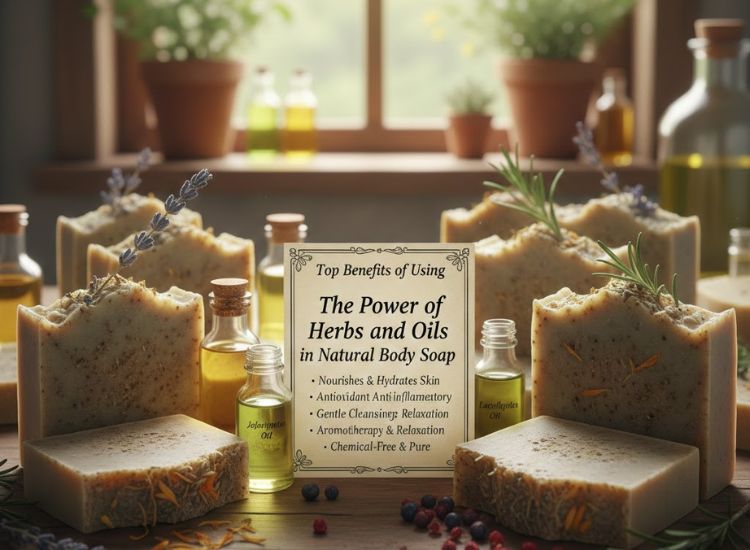
Prakriti Online Store believes that what touches your skin should be as thoughtful as what goes into your body. Ever wondered why traditional recipes leaned so heavily on plants and cold-pressed oils? In a world flooded with synthetic cleansers, herbs and oils are quietly making a comeback, redefining what truly effective skincare looks like.
Today, Natural Body Soap is no longer just a wellness trend. It has become a smart business decision for brands and retailers who want to offer products that feel honest, functional, and genuinely skin-friendly.
Why Herbs and Oils Matter in Soap
At a chemical level, soap is simple: fats mixed with an alkali create cleansing action. But the quality of those fats—and what you blend into them—changes everything. Herbs bring bioactive compounds, while natural oils deliver fatty acids that support the skin barrier. Instead of stripping oils away, these ingredients clean while replenishing.
According to the U.S. FDA, there is no evidence that antibacterial soaps are more effective than plain soap and water for preventing illness (FDA.gov). This insight has nudged many businesses to rethink harsh formulations and look toward botanical alternatives.
The Role of Herbs: Small Leaves, Big Impact
Herbs are not just there for fragrance or color. They work quietly in the background, offering therapeutic value that customers can actually feel.
- Neem and Tulsi: Traditionally used in Indian households for skin clarity and microbial balance.
- Calendula and Chamomile: Known for calming irritated skin, especially in dry or polluted environments.
- Aloe Vera: Brings hydration and a cooling effect, perfect for everyday soaps.
For B2B buyers, this matters because customers are now label readers. They recognize herbal names and associate them with trust and heritage. That recognition turns ingredients into selling points.
Oils: The Backbone of a Good Bar
Oils do the heavy lifting in soap. They determine hardness, lather, and—most importantly—how skin feels after washing.
Popular Oils in Natural Soaps
- Coconut Oil: Creates rich lather and effective cleansing.
- Olive Oil: Adds mildness and long-term moisturization.
- Castor Oil: Enhances foam and locks in hydration.
From a business perspective, oil choice influences positioning. A soap rich in olive oil speaks to premium skincare, while coconut-based bars signal freshness and everyday utility.
What Makes This Model Work for Businesses
For retailers and distributors, natural formulations offer more than just ethics—they provide differentiation. When you sell soaps built on herbs and cold-pressed oils, you’re not just selling cleanliness; you’re selling a story of craft, care, and transparency.
Midway through your brand journey, pairing soap with Handmade & Natural Beauty Products helps build a lifestyle identity instead of a single product line. That’s where repeat customers come from.
Real-World Consumer Shifts
Environmental agencies have reported rising concern about chemical runoff and microplastics in personal care products.
In response, buyers are moving toward biodegradable and plant-based alternatives. Natural soaps check both boxes: skin-safe and eco-aware.
In practical terms, this means more shelf time, fewer return complaints, and better brand loyalty.
FAQs
Are herbal soaps suitable for all skin types?
Most herbal soaps are designed to be gentler than synthetic ones. However, businesses should still recommend patch testing for highly sensitive users.
Do natural oils make soap greasy?
No. When formulated correctly, oils are converted into soap and glycerin, leaving skin soft—not oily.
Is natural soap shelf-stable for retail?
Yes. With proper curing and packaging, herbal soaps can remain stable for over a year.
Why do customers trust herbal ingredients more?
Because herbs are familiar. People associate them with home remedies, traditional care, and fewer side effects.
Final Thoughts
The power of herbs and oils in soap lies in their quiet efficiency. They clean without drama, nourish without exaggeration, and sell without shouting. For business owners, this balance is golden—products that work, stories that resonate, and customers who return.