
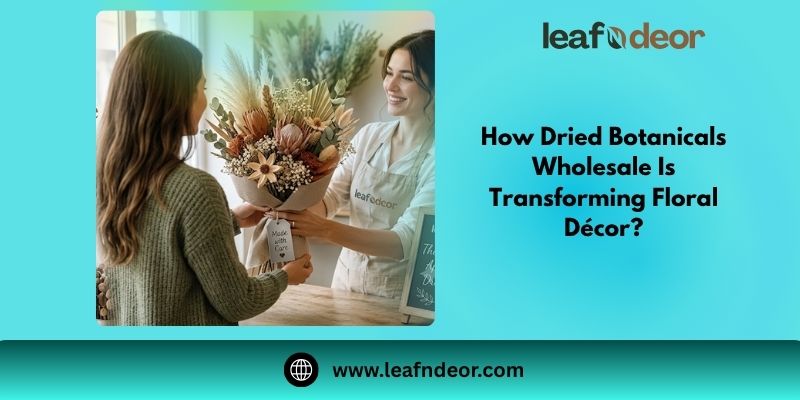
Floral décor is changing. Instead of relying only on fresh blooms, designers, retailers, and event stylists are turning to texture, longevity, and natural character. But what is driving this shift? The growing use of dried botanicals wholesale is giving creative professionals more ways to build beautiful arrangements that feel organic and distinctly modern.
Why Dried Botanicals Are Gaining Attention?
Fresh flowers will always have their place, but they come with a practical limitation: time. A bouquet may look spectacular today and noticeably different a few days later. Dried botanicals offer another approach. Grasses, seed pods, preserved leaves, stems, and dried blooms can retain their visual appeal for considerably longer when properly handled and displayed.
There is also a broader market behind the trend. According to the U.S. Department of Agriculture’s National Agricultural Statistics Service, U.S. floriculture sales reached about $6.71 billion in 2024, up from $6.7 billion in 2023. While these figures cover the wider floriculture sector rather than dried botanicals alone, they demonstrate the continuing commercial scale of the floral market. USDA NASS floriculture data
How Wholesale Supply Is Changing Floral Design?
Wholesale sourcing changes the creative equation. Instead of purchasing small quantities for one project at a time, florists, interior stylists, wedding planners, and décor businesses can explore broader collections and plan their inventory around recurring projects.
This matters because dried materials are unusually versatile. A single botanical can become part of a table arrangement, a wall installation, a gift package, or a retail display. The material is not tied to one design idea, which gives creative teams more freedom to experiment.
Three practical advantages for professionals
- Design flexibility: Different shapes, sizes, colors, and textures can be combined without depending entirely on seasonal availability.
- Inventory planning: Businesses can purchase selected materials in larger quantities and keep them available for future projects.
- Visual consistency: Repeated botanical elements can help a brand maintain a recognizable look across events, stores, and product photography.
Texture Is Becoming as Important as Color
One of the most interesting changes is the way designers are thinking about texture. Instead of asking only, “What color should this arrangement be?” they are asking how it should feel visually.
Feathery grasses can create movement. Seed pods add sculptural detail. Dried leaves introduce softer shapes, while preserved stems can provide height without making an arrangement feel overly formal. The result is often less symmetrical and more relaxed—a style that works particularly well in contemporary interiors.
For businesses searching for dried flowers for decor wholesale, this variety can be especially useful. Instead of treating dried flowers as a single product category, designers can build collections around texture, season-inspired palettes, or specific interior styles.
Where Dried Botanicals Work Best?
The appeal extends well beyond traditional bouquets. Today, dried botanicals can become part of the visual language of an entire space.
- Hospitality spaces: Hotels, cafés, restaurants, and boutique properties can use dried arrangements for reception areas and tables where low-maintenance décor is useful.
- Retail interiors: Botanical displays can soften shelves, counters, windows, and product presentation areas without competing heavily with merchandise.
- Events and weddings: Arches, table centerpieces, welcome signs, and backdrop installations can all incorporate dried elements.
- Home décor: Vases, wall arrangements, wreaths, and minimalist displays provide easy ways to introduce natural texture indoors.
For a closer look at how botanical materials can elevate commercial spaces, explore Nature Meets Luxury: Effective Use of Botanical Elements in Retail Environments.
What Smart Buyers Should Look For?
Not every dried botanical is equally suitable for professional use. Before placing a wholesale order, buyers should think beyond appearance. Consistency, packaging, stem strength, moisture control, color stability, and overall presentation can make a noticeable difference once products reach a client or retail floor.
- Check whether the botanical arrives clean, dry, and well protected.
- Compare sizes and textures across batches before committing to large quantities.
- Consider how easily the material can be stored without crushing or fading.
- Choose varieties that match the design styles your customers actually request.
Good sourcing is often less glamorous than arranging flowers, but it is what makes repeatable design possible. A reliable supply can save creative teams from last-minute substitutions and help businesses deliver a more consistent customer experience.
Frequently Asked Questions
What are dried botanicals used for?
Dried botanicals are used for floral arrangements, wedding décor, retail displays, home styling, wreaths, wall installations, table décor, and creative product presentation.
Why buy dried botanicals wholesale?
Wholesale purchasing can give florists, decorators, and retailers access to larger selections and quantities, making it easier to plan inventory and handle multiple projects.
Are dried botanicals suitable for modern interiors?
Yes. Their natural textures and sculptural forms work particularly well with minimalist, rustic, contemporary, bohemian, and nature-inspired interior styles.
How should dried botanicals be stored?
Keep them in a clean, dry environment away from excessive humidity, direct sunlight, and unnecessary handling. Proper storage helps preserve their shape and appearance.
Final Thoughts
Dried botanicals are doing more than replacing a few fresh flowers in a vase. They are expanding what floral décor can look and feel like. For designers and businesses, the combination of texture, versatility, and practical sourcing makes dried botanicals a compelling material for modern creative work. As floral styling continues to evolve, natural materials are likely to remain an important part of that conversation.
Full Audio Version: Click Here

