For U.S. boutiques and ethnic-fashion retailers, premium Jamdani sourcing is not only about finding beautiful sarees. It is about verifying craftsmanship, fiber composition, origin, consistency, documentation and wholesale terms before placing a larger order. A reliable Bengali jamdani wholesale partner should make those decisions easier, not more complicated.<
Why Bengali Jamdani Works for Premium Wholesale Collections
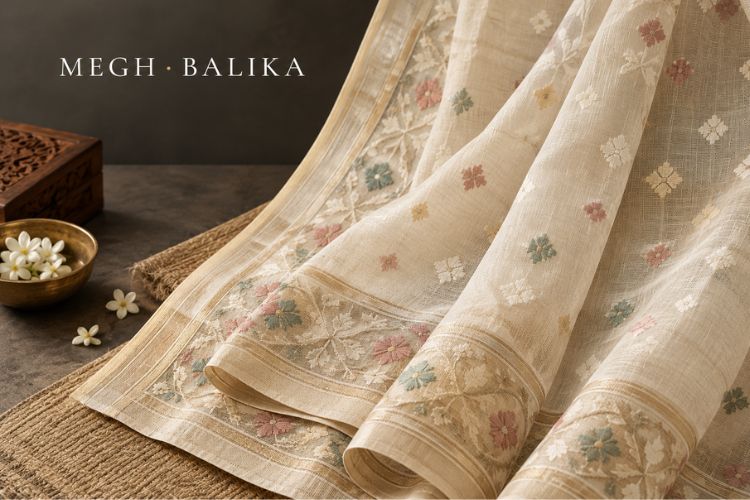
Jamdani is valued for its intricate woven motifs, lightweight feel and unmistakably handcrafted character. The tradition is associated with Bengal’s long textile history, and authentic handloom production can involve highly detailed motif work that requires considerable skill and time.
For a U.S. boutique, that craftsmanship creates a product story that mass-produced textiles often cannot match. Floral motifs, geometric patterns, subtle textures and carefully developed color combinations can also help a retailer build a collection that feels distinctive rather than interchangeable.
What U.S. Buyers Should Check Before Ordering
1. Confirm the Product’s Exact Construction
Do not rely on the word “Jamdani” alone. Ask whether the saree is cotton, silk, a blend or another construction, and whether the motifs are handwoven or produced through a different process.
2. Request Samples Before a Large Order
A sample can reveal weave density, finish, drape, color accuracy, motif detail and packaging quality. It also gives a retailer a practical reference for approving future batches.
3. Clarify MOQ and Customization
Wholesale buyers should confirm minimum quantities by design, color options, private-label possibilities, lead time and whether custom collections are available.
4. Check U.S. Labeling Requirements
Imported textile products sold in the United States generally need accurate fiber-content, country-of-origin and responsible-business information. Covered apparel also requires appropriate care instructions. Buyers should settle labeling responsibilities before production begins.
Export Planning Matters More in 2026
U.S. import procedures have become more important for small and medium-sized fashion businesses. The previous assumption that a low-value shipment would automatically qualify for duty-free de minimis treatment is no longer reliable. Importers should confirm the entry method, documentation and current duty treatment before finalizing a purchase.
For Indian-origin goods, current U.S. trade measures also make it risky to calculate landed cost from a simple headline tariff. The applicable HTS classification, exemptions, additional duties, shipping terms and importer responsibilities all need to be checked for the actual order.
Build a Jamdani Collection, Not Just a Product List
A strong wholesale assortment can mix everyday lighter designs with festive statement pieces, while keeping a consistent quality level across the collection. Consider organizing the range by fabric, motif scale, color story and target retail price rather than offering dozens of unrelated designs.
For retailers expanding into other Bengal crafts, a kantha embroidery supplier USA sourcing path can complement a Jamdani assortment with hand-embroidered pieces and create a broader Bengali textile story.
Why Supplier Transparency Matters
For export buyers, the best supplier relationship is built around clear specifications. Ask for product composition, dimensions, MOQ, sample policy, lead time, packing method, commercial invoice details and the documents relevant to the shipment.
Megh Balika positions its Jamdani collection around handloom production, wholesale orders, quality inspection and export-oriented support. That makes a catalogue-and-sample discussion a useful starting point for boutiques evaluating a new collection.
FAQs
Can U.S. boutiques order Bengali Jamdani in bulk?
Yes. Wholesale suppliers may offer bulk and customized orders, but MOQ, designs and lead times should be confirmed before placing an order.
What should I verify before importing sarees into the USA?
Confirm fiber composition, country of origin, labeling, care information, customs classification, shipping terms and the current duty treatment for the specific products.
Should I request samples first?
For premium wholesale collections, sampling is a practical way to verify quality, construction, color and finishing before committing to larger quantities.
Final Takeaway
Premium Bengali Jamdani wholesale is best approached as a sourcing decision rather than a simple product purchase. Verify the weave, material, origin, labels, MOQ, sample quality and export assumptions first. With those fundamentals in place, U.S. retailers can build a Jamdani collection that combines cultural identity with practical wholesale requirements.
Also Read: Best Jamdani Saree Wholesale USA
Blog Development Credits:
This article was developed by Megh Balika, researched and refined with AI assistance from ChatGPT, Google Gemini, and Copilot, followed by final SEO optimization by Megh Balika.