
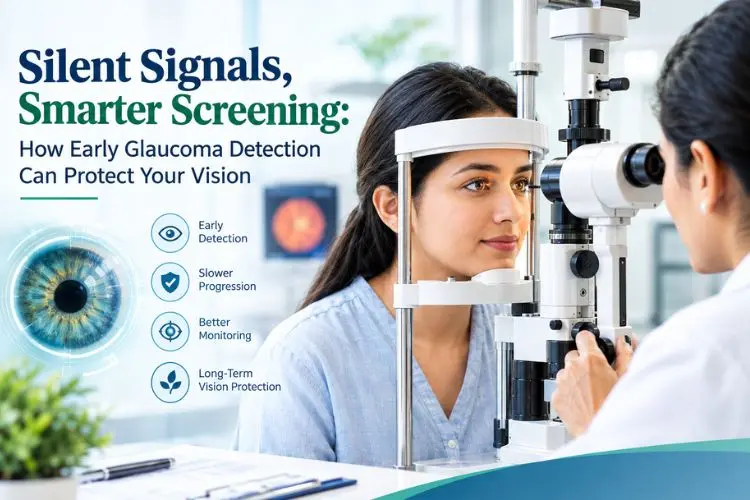
Pushpanjali Eye Care emphasises the importance of early glaucoma detection because this eye condition can gradually damage the optic nerve before noticeable vision changes appear. Regular comprehensive eye examinations help identify warning signs, assess risk, and guide timely treatment. Although glaucoma-related vision loss cannot usually be reversed, early diagnosis and appropriate care can help preserve remaining vision.
Consulting a glaucoma specialist in Kolkata can help you understand your risk and determine which examinations are appropriate for your eyes. The key is not to wait for symptoms before arranging an eye check-up.
What Is Glaucoma, and Why Can It Go Unnoticed?
Glaucoma is a group of eye conditions that damage the optic nerve, which carries visual information from the eye to the brain. Increased pressure inside the eye is an important risk factor, although glaucoma can also develop when eye pressure falls within the statistically normal range.
In many cases, glaucoma develops slowly and initially affects peripheral vision. The brain can compensate for subtle changes, making the condition difficult to recognise during everyday activities.
For example, someone may continue reading, using a phone, and recognising faces normally while gradually losing parts of their side vision. By the time these changes become noticeable, some permanent damage may already have occurred.
What Are the Early Warning Signs of Glaucoma?
Most people with early-stage open-angle glaucoma experience no obvious symptoms. This is why screening is more reliable than waiting for warning signs.
As the condition progresses, possible symptoms include:
- Gradual loss of peripheral or side vision.
- Difficulty noticing objects approaching from the side.
- Increasing difficulty navigating unfamiliar spaces.
- In advanced cases, significant visual impairment.
Not every person experiences these changes in the same way. Symptoms such as blurred vision can also have other causes, so an eye examination is necessary to determine what is happening.
When Is Glaucoma an Emergency?
Sudden severe eye pain, a red eye, blurred vision, halos around lights, headache, nausea, or vomiting can indicate acute angle-closure glaucoma. This is a medical emergency that requires immediate assessment. Do not wait for a routine appointment if these symptoms develop suddenly.
Who Should Consider Glaucoma Screening?
Glaucoma can affect adults of different ages, but certain factors increase the likelihood of developing it. Screening recommendations should reflect personal risk, age, examination findings, and medical history.
Pay particular attention to screening if you:
- Have a parent, sibling, or other close relative with glaucoma.
- Are over 40, especially as your age-related risk increases.
- Have elevated eye pressure or suspicious optic nerve findings.
- Have diabetes or other health factors that may affect eye health.
- Have experienced previous eye injuries or used steroid medicines, particularly for prolonged periods.
These factors do not automatically mean you have glaucoma. They indicate that discussing an appropriate screening schedule with an eye care professional may be beneficial.
How Is Glaucoma Detected Before Symptoms Appear?
A comprehensive eye examination combines different tests because no single measurement can reliably confirm or exclude every form of glaucoma. Your clinician considers the results together rather than relying on eye pressure alone.
Step-by-Step: What Happens During a Glaucoma Assessment?
- Review of medical history: The eye care professional asks about family history, existing health conditions, medications, and previous eye problems.
- Eye pressure measurement: Tonometry measures intraocular pressure. A normal reading does not rule out glaucoma.
- Optic nerve examination: The clinician examines the optic nerve for structural changes that may suggest damage.
- Visual field testing: This assesses peripheral vision and helps identify areas of vision loss that may not be noticeable in daily life.
- Retinal nerve fibre imaging: Optical coherence tomography (OCT), when indicated, creates detailed images that help assess the nerve fibres around the optic nerve.
- Assessment of the drainage angle: Gonioscopy may be performed to examine the drainage angle and help distinguish between different types of glaucoma.
Depending on your findings, additional tests or repeat examinations may be necessary. Comparing results over time is especially valuable because subtle changes can reveal progression even when you feel that your vision has remained stable.
Why Does Early Diagnosis Make a Difference?
The purpose of glaucoma treatment is to slow or prevent further optic nerve damage. Treatment cannot restore vision already lost because of glaucoma, but timely management can help protect the vision that remains.
Depending on the type and severity of glaucoma, treatment may include prescription eye drops, laser procedures, or surgery. Regular monitoring helps determine whether the chosen approach is controlling the condition effectively.
For patients seeking comprehensive assessment and ongoing eye care, best eye hospital in Kolkata is a relevant search term when exploring local care options. Patients should evaluate a facility based on the availability of appropriate diagnostic services, qualified clinicians, and follow-up support.
It is also important to understand that laser eye surgery in Kolkata generally refers to procedures that reduce dependence on glasses or contact lenses. LASIK does not treat glaucoma. Anyone considering refractive surgery should disclose a history of glaucoma, elevated eye pressure, or suspicious test results so their suitability can be assessed properly.
How Can You Protect Your Vision Between Appointments?
Glaucoma prevention is not always possible, but taking a proactive approach to eye health can improve the chances of identifying the condition early and managing it effectively.
- Keep scheduled appointments: Follow the examination interval recommended for your individual risk.
- Use prescribed medication consistently: Do not stop glaucoma drops or change their dosage without consulting your clinician.
- Share your family history: Tell your eye care professional if close relatives have glaucoma.
- Report changes promptly: New visual symptoms deserve assessment, even if your previous examination was normal.
- Attend follow-up testing: Repeat visual field tests and imaging can help identify changes that a single examination might miss.
If you need guidance about ongoing eye health concerns, you can consult a best eye specialist in Kolkata to discuss suitable examinations and the next steps for your individual needs.
Frequently Asked Questions
Q. Can glaucoma develop without any symptoms?
A. Yes. Open-angle glaucoma often develops gradually without noticeable early symptoms. Regular comprehensive eye examinations are important because vision changes may appear only after damage has occurred.
Q. Can a normal eye pressure test rule out glaucoma?
A. No. Glaucoma can occur even when eye pressure is within the normal range. Diagnosis requires assessment of the optic nerve, visual field, and other findings as appropriate.
Q. At what age should I start glaucoma screening?
A. There is no single starting age suitable for everyone. Adults should discuss screening with an eye care professional, particularly after age 40 or earlier if they have a family history or other risk factors.
Q. Can glaucoma-related vision loss be reversed?
A. Usually, no. Damage caused by glaucoma is generally permanent. However, appropriate treatment and regular monitoring can help slow or prevent further vision loss.
Q. How often should I get tested for glaucoma?
A. The interval depends on your age, risk factors, examination findings, and whether glaucoma has already been diagnosed. Your eye care professional can recommend an appropriate follow-up schedule.
Conclusion
Glaucoma can progress quietly, which makes early screening one of the most important steps in protecting long-term vision. Knowing your risk, attending comprehensive eye examinations, and following professional advice can help identify problems before noticeable sight loss develops. When it comes to glaucoma, a normal-feeling eye is not necessarily a healthy eye.
Blog Development Credit:
This blog was developed with AI-assisted insights from ChatGPT and Google Gemini, combining research-based information with the healthcare perspective of Pushpanjali Eye Care. The content focuses on early glaucoma detection, regular eye examinations, and timely treatment to help readers understand the importance of protecting their vision.