
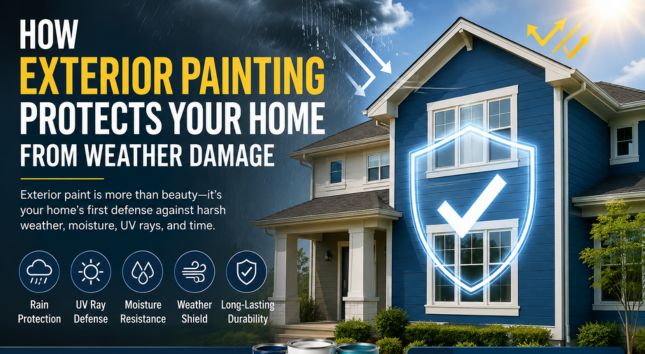
Your home’s exterior paint does far more than improve curb appeal. A high-quality Exterior Painting job acts as a protective shield against harsh weather conditions like rain, sunlight, humidity, wind, and temperature changes. Without proper exterior paint protection, moisture and UV exposure can slowly damage siding, wood, concrete, and other structural materials over time.
Many homeowners think exterior paint is mainly decorative until they notice peeling walls, mold growth, or cracks caused by weather exposure. In reality, paint serves as the first line of defense between your home and the environment. When applied correctly, it helps preserve both appearance and structural durability for years.
What Is Exterior Paint Protection?
Exterior paint protection refers to the ability of exterior coatings to shield a home’s surface from environmental damage. Modern weather-resistant paints are designed to resist water penetration, UV radiation, dirt buildup, and temperature-related expansion or contraction.
How Exterior Paint Works as a Protective Layer
- Creates a moisture-resistant barrier
- Prevents direct UV damage to surfaces
- Reduces cracking and wood rot
- Protects siding from temperature fluctuations
- Helps stop mold and mildew growth
- Improves overall structural lifespan
Think of exterior paint like sunscreen for your home. Without protection, constant exposure to weather slowly weakens building materials, even if the damage is not immediately visible.
Also Read: Essential Wall Protection Solutions: Best Products to Consider
How Rain and Moisture Damage Unpainted Surfaces
Water is one of the biggest threats to residential exteriors. Even small amounts of moisture can gradually seep into walls, wood trim, or siding when surfaces are unprotected or poorly painted.
Once moisture enters, problems multiply quickly. Wood begins to swell, paint peels away, mold develops, and structural materials weaken over time.
Common Moisture-Related Problems
- Wood rot and decay
- Mildew and mold growth
- Surface bubbling and peeling paint
- Cracks in siding or stucco
- Water stains and discoloration
This is especially important in areas with heavy rainfall or high humidity. Homes exposed to changing weather cycles need properly sealed exterior surfaces to avoid expensive repairs later.
Why UV Rays Are More Damaging Than Most Homeowners Realize
Sunlight may seem harmless compared to storms or rain, but ultraviolet rays gradually break down exterior surfaces every single day.
Over time, UV exposure causes fading, brittleness, chalking, and cracking. Paint loses elasticity, which allows moisture to penetrate the surface more easily during rainy seasons.
Signs of UV Damage on Exterior Walls
- Faded or uneven color
- Dry, powdery paint surfaces
- Hairline cracks
- Peeling around windows and trim
- Weakening wooden surfaces
Modern exterior coatings often include UV-resistant technology, which helps maintain color stability and surface durability for longer periods.
How Professional Exterior Painting Improves Weather Resistance
A durable paint job depends heavily on preparation and application quality. Even premium paint can fail early if surfaces are not cleaned, repaired, or primed correctly.
That is why many homeowners search for Professional Painters Near Me rather than attempting large exterior projects themselves.
Step-by-Step Exterior Painting Process
1. Surface Inspection
Professionals inspect siding, stucco, trim, and walls for cracks, moisture issues, peeling paint, or damaged areas before painting begins.
2. Cleaning and Surface Preparation
Pressure washing removes dirt, mildew, and loose paint. Proper preparation improves paint adhesion and long-term durability.
3. Repairing Damage
Small cracks, gaps, and wood damage are repaired before applying primer or paint.
4. Applying Primer
Primer creates a stronger bond between the surface and topcoat while improving moisture resistance.
5. Using Weather-Resistant Paint
Professionals select paint designed specifically for climate conditions such as heat resistance, waterproofing, or humidity protection.
How Exterior Paint Helps Regulate Temperature
Exterior paint can also contribute to energy efficiency. Reflective or heat-resistant coatings reduce heat absorption, helping maintain more stable indoor temperatures.
Lighter paint colors often reflect sunlight better, which can lower cooling strain during hot summer months. This is one reason modern exterior remodeling projects increasingly focus on both durability and energy performance.
When Should You Repaint Your Home Exterior?
Exterior paint does not fail overnight. Most damage builds gradually, which is why routine inspection matters.
Warning Signs Your Home Needs Repainting
- Peeling or cracking paint
- Visible fading
- Moisture stains
- Soft or damaged wood
- Mold or mildew spots
- Exposed bare surfaces
In many cases, repainting early prevents far more expensive structural repairs later. Waiting too long usually increases restoration costs significantly.
FAQs
How does exterior painting protect against weather damage?
Exterior paint creates a protective barrier that blocks moisture, UV rays, wind, and temperature fluctuations from damaging surfaces.
How often should exterior painting be done?
Most homes need exterior repainting every 5–10 years depending on climate, paint quality, and surface condition.
Can exterior paint prevent mold growth?
Yes. Quality exterior coatings help reduce moisture penetration, which lowers the risk of mold and mildew development.
Is professional exterior painting worth the cost?
Professional painting often lasts longer because surfaces are properly prepared, repaired, and coated using the right materials and techniques.
What type of paint is best for weather protection?
High-quality acrylic latex exterior paints are commonly recommended because they offer flexibility, UV resistance, and strong moisture protection.
Conclusion
Exterior painting is not simply about aesthetics—it is a long-term investment in your home’s protection. Good paint shields surfaces from rain, sunlight, humidity, and temperature stress before small issues become expensive repairs. Homeowners who treat exterior maintenance seriously often save significant money while keeping their homes stronger, cleaner, and more durable over time.
Also Read: Interior Painting Mistakes Homeowners Should Avoid
Blog Development Credits:
This blog was thoughtfully conceptualized by Soumyajit Sardar, crafted with the help of advanced AI platforms like ChatGPT, Gemini, and Copilot. Final editing and SEO expertise were provided by Mister Paint.