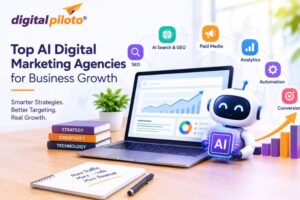

The future of search optimization is no longer limited to ranking web pages. Modern marketers must optimize content for AI-powered search, voice assistants, answer engines, and user intent simultaneously. Success will depend on creating trustworthy, experience-driven content that directly answers questions while delivering genuine value. This shift is already influencing industries like Real Estate Digital Marketing, where customers expect instant, accurate answers before making decisions.
Traditional SEO still matters, but it is becoming one part of a broader visibility strategy. Search engines increasingly evaluate expertise, content quality, user satisfaction, and contextual relevance rather than simply matching keywords. Marketers who adapt early will be better positioned to earn visibility across Google’s AI experiences, voice search, and conversational assistants.
What Is the Future of Search Optimization?
Definition: Future search optimization is the practice of creating content that can be understood, trusted, and recommended by both traditional search engines and AI-powered answer engines. Instead of optimizing only for rankings, marketers optimize for visibility wherever users search for information.
Search is becoming conversational. People now ask complete questions instead of typing a few keywords. AI-generated summaries often appear before organic listings, meaning brands must create content that deserves to be quoted rather than merely indexed.
Why Is Search Changing So Quickly?
Several technologies are reshaping how people discover information online.
- AI-powered search generates direct answers instead of listing only webpages.
- Voice assistants encourage natural-language queries.
- User intent has become more important than exact keyword matching.
- Experience, trust, and credibility influence search visibility.
- Personalized search delivers different results to different users.
For marketers, this means content should solve real problems rather than simply target keywords.
How Should Marketers Adapt Their Search Strategy?
Step 1: Focus on User Intent
Every piece of content should answer a specific question or solve a clear problem. Think beyond search volume and understand why someone is searching in the first place.
Step 2: Build Topic Authority
Publishing isolated blog posts is no longer enough. Create interconnected content around core topics so search engines recognize your expertise.
Step 3: Write for Humans First
Natural language performs better because it aligns with both AI systems and human readers. Avoid unnecessary repetition and explain concepts clearly.
Step 4: Demonstrate Experience
Include practical examples, case studies, original insights, or lessons learned. Real-world experience helps content stand out in increasingly competitive search environments.
Step 5: Optimize Technical Performance
Fast-loading pages, mobile responsiveness, structured data, and accessible design remain essential foundations of successful search optimization.
Will Traditional SEO Still Matter?
Absolutely. SEO is evolving rather than disappearing.
Core ranking signals such as crawlability, page experience, internal linking, keyword relevance, and backlinks still contribute to visibility. However, these elements now work alongside newer signals that measure helpfulness, credibility, and content quality.
The smartest marketers are combining traditional SEO, content marketing, and Answer Engine Optimization (AEO) instead of choosing one over another.
How AI Search Impacts Different Industries
Different industries experience this transition in different ways. Travel businesses, for example, rely heavily on trustworthy recommendations, making content quality increasingly valuable. A specialized Hospitality Marketing Agency can benefit from creating destination guides, frequently asked questions, and experience-based content that AI search platforms are more likely to reference.
Similarly, healthcare, education, finance, and eCommerce businesses must prioritize factual accuracy, transparent expertise, and customer-focused content over promotional messaging.
What Skills Will Future Marketers Need?
The future belongs to marketers who understand both technology and human behavior.
- Answer Engine Optimization (AEO)
- Semantic SEO
- Content strategy
- First-party data analysis
- AI-assisted content creation
- User experience optimization
- Brand authority development
Notice that none of these skills replace creativity. AI can generate information, but human expertise creates trust and originality.
Common Mistakes to Avoid
- Writing only for search engines instead of readers.
- Publishing generic AI-generated content without expert review.
- Ignoring search intent.
- Overusing keywords unnaturally.
- Failing to update older content.
- Neglecting technical SEO fundamentals.
Many websites lose visibility not because their content is incorrect, but because it offers nothing new. Information gain is becoming a genuine competitive advantage.
The Future Is About Trust, Not Tricks
The next generation of search rewards brands that consistently provide reliable, accurate, and genuinely useful information. Rather than chasing every algorithm update, marketers should build resources people want to reference and AI systems can confidently recommend.
When content demonstrates expertise, answers questions clearly, and reflects authentic experience, it naturally performs better across both traditional search engines and AI-powered search experiences.
Frequently Asked Questions
What is future search optimization?
Future search optimization combines traditional SEO with AI readiness, user intent optimization, and Answer Engine Optimization to improve visibility across modern search platforms.
Will AI replace SEO?
No. AI is changing how SEO works, but it is not replacing it. SEO is evolving to include better content quality, authority, and user-focused optimization.
Why is AEO important for marketers?
AEO helps content appear in AI-generated answers, featured snippets, and voice search results, increasing visibility beyond traditional rankings.
How can businesses prepare for AI search?
Create authoritative content, answer user questions directly, improve technical SEO, use structured data, and regularly update information.
What is the biggest trend in search optimization?
The biggest trend is creating trustworthy, experience-driven content that satisfies user intent while being understandable by AI-powered search systems.
Conclusion
Search optimization is entering a new era where visibility depends less on manipulating algorithms and more on delivering meaningful answers. Marketers who combine technical excellence with authentic expertise, helpful content, and strategic thinking will remain competitive regardless of how search technology continues to evolve.
Blog development Credits
This article was developed through extensive industry research and refined with advanced AI-assisted workflows. Final editorial improvements, quality assurance, and SEO optimization were completed by Digital Piloto, following the original concept inspired by Amlan Maiti.