
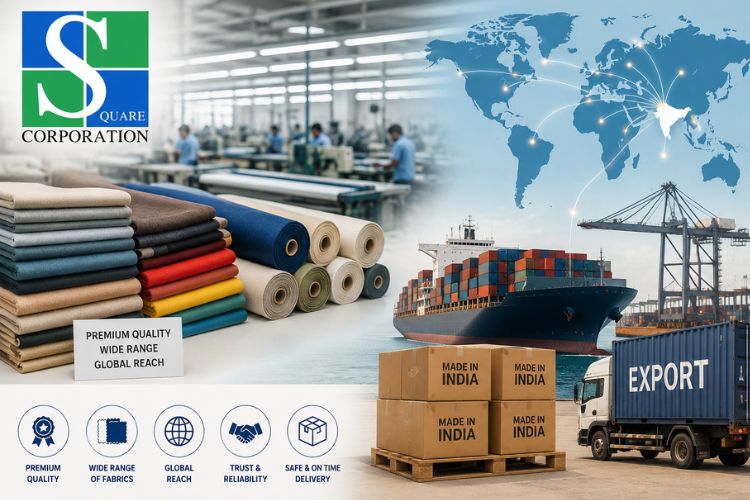
When overseas buyers source fabric from India, they are buying more than rolls of material—they are investing in consistency, timelines, and long-term supply confidence. With a broad manufacturing base and deep textile expertise, India remains an important sourcing destination for global brands, wholesalers, and garment manufacturers seeking dependable Textile Suppliers in India.
Why India Remains a Strong Textile Sourcing Hub
India has an unusually diverse textile ecosystem. Cotton, linen, viscose, polyester, blended fabrics, printed materials, and traditional textiles can all be sourced through its extensive manufacturing network. This variety gives international buyers room to match fabric specifications with different markets rather than relying on a one-size-fits-all supply chain.
The numbers tell an interesting story. According to India’s Ministry of Textiles, textile and apparel exports, including handicrafts, reached approximately US$24.06 billion during April–November 2024, up 7% from the corresponding period a year earlier. The ministry also reported that the USA, UK, and European Union together represented 53% of India’s textile and apparel exports including handicrafts in FY2023–24.
Also Read: Why Export-Quality Yarn Is the Foundation of High-Performance Fabrics
What Makes a Fabric Exporter Truly Trustworthy?
A good exporter is not simply the company offering the lowest quotation. International sourcing often involves multiple samples, technical specifications, testing requirements, documentation, packaging standards, and shipping schedules. A dependable supplier understands these details before the order reaches production.
Look for These Practical Qualities
- Consistent quality: Fabric should maintain its expected weight, construction, colour, finish, and feel across batches.
- Clear communication: Technical questions, quotations, samples, and production updates should receive timely responses.
- Export experience: Familiarity with international documentation and shipping procedures can prevent unnecessary delays.
- Flexible sourcing: A capable exporter should understand different fibre compositions, fabric constructions, and finishing requirements.
- Reliable production planning: Meeting agreed lead times matters just as much as achieving the right price.
Fabric Variety Matters for Global Buyers
Different markets have different expectations. A fashion label may want lightweight printed cotton, while a home-textile buyer could need durable woven fabric. Another customer may prioritise recycled fibres or organic materials. This is where experienced fabric exporters in india can make sourcing considerably easier.
India’s strength lies partly in its broad product mix. Government and industry data show that cotton and cotton-based products continue to occupy an important place in India’s textile export basket. At the same time, man-made fibres, technical textiles, home textiles, and value-added fabrics are creating additional opportunities for exporters and international buyers. Economic Survey 2024–25
Before Placing a Bulk Order
- Request fabric samples and compare them with your approved specifications.
- Confirm GSM, composition, width, construction, colour standards, and finishing requirements.
- Discuss minimum order quantities and production lead times in writing.
- Clarify inspection procedures, packaging, payment terms, and shipping responsibilities.
- Ask how quality issues or production variations are handled.
Sustainability Is Becoming Part of the Buying Decision
For many global buyers, sustainability has moved from a marketing phrase to a procurement consideration. Buyers increasingly ask where fibres originate, how fabrics are processed, and whether suppliers can provide relevant documentation or certifications.
This does not mean every order needs the same sustainability credentials. Rather, the right exporter should be able to discuss responsible sourcing requirements honestly and explain which standards apply to a particular product. That transparency can be more valuable than making broad environmental claims.
Why Long-Term Export Partnerships Work Better
Textile sourcing becomes smoother when an exporter learns a buyer’s preferences over time. Once the supplier understands the required hand feel, shade range, packaging format, acceptable tolerances, and delivery expectations, repeat orders become far more predictable.
For buyers, this can reduce sampling time and communication gaps. For exporters, long-term relationships create a clearer production pipeline. In my view, that is the real difference between finding a fabric vendor and finding a dependable sourcing partner.
Frequently Asked Questions
What fabrics can Indian exporters supply?
Indian exporters can supply cotton, linen, polyester, viscose, blended, printed, dyed, woven, knitted, and several specialty fabrics, depending on their manufacturing and sourcing network.
How can overseas buyers evaluate an Indian fabric exporter?
Start with samples, technical specifications, production capability, export experience, quality procedures, lead times, documentation, and references. A small trial order can also help evaluate consistency before scaling up.
Are Indian fabric exporters suitable for bulk international orders?
Yes. India’s established textile manufacturing ecosystem supports international sourcing across different product categories and order volumes. However, buyers should always verify a supplier’s specific capacity before committing to a large order.
Why is fabric quality consistency important?
Even a small variation in colour, GSM, width, or finishing can affect garment production and customer expectations. Consistency therefore helps brands control production quality and reduce avoidable waste.
Also Read: Cotton Yarn Export Quality Standards India
Final Thoughts
Choosing trusted fabric exporters in India is ultimately about looking beyond the catalogue and the quotation. Quality control, communication, production capability, transparency, and dependable delivery all matter. When these pieces come together, Indian textile sourcing can become a practical, scalable, and lasting advantage for global businesses.
Blog Development Credits:
This article was developed with creative input from Square Corporation, supported by AI-assisted research, drafting, and SEO refinement for improved online visibility.




One thought on “Trusted Fabric Exporters in India for Global Markets”
Comments are closed.