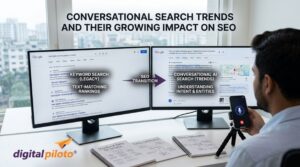

Search isn’t what it used to be. With large language models reshaping how users discover SaaS products, traditional SEO alone feels… incomplete. So how do you stay visible when AI tools summarize answers instead of showing ten blue links? This guide breaks down a practical LLM SEO architecture audit for 2026—built for SaaS teams that want consistency, clarity, and real growth.
If you’re already working with an AI SEO Company Kolkata, you’ve likely noticed a shift: rankings matter, but entity understanding and brand signals matter more. Let’s unpack what that means in practice.
What is LLM SEO Architecture for SaaS?
LLM SEO architecture is the structured way your SaaS brand communicates with AI-driven search systems. Think of it less like optimizing pages, and more like building a “knowledge graph” around your brand.
Instead of asking “Are we ranking?”, modern teams ask:
- Are AI engines citing our brand?
- Is our product clearly understood as an entity?
- Do we appear in synthesized answers?
According to McKinsey, generative AI could add trillions in value annually, much of it driven by knowledge discovery. That means your SaaS visibility now depends on how well machines interpret your authority.
Core Components of a 2026 LLM SEO Audit
1. Entity Clarity and Consistency
Your brand must exist as a clearly defined entity across the web. This includes consistent naming, product descriptions, and contextual associations.
- Ensure structured data aligns across pages
- Standardize brand mentions across PR, blogs, and directories
- Build strong topical clusters (not random blog posts)
A messy brand footprint confuses LLMs. Clean signals build trust.
2. Semantic Depth Over Keyword Density
Keywords still matter—but depth wins. LLMs evaluate how comprehensively you cover a topic.
- Create pillar content with supporting subtopics
- Answer real user questions within content
- Use natural language instead of forced keywords
This is where many SaaS blogs fail—they skim topics instead of owning them.
3. Data Source Visibility
LLMs pull from trusted sources. If your SaaS brand isn’t cited, it’s invisible in AI answers.
- Publish research-backed content
- Earn backlinks from authoritative domains
- Get listed in industry directories and reports
Think beyond Google. Think “Where would an AI learn about us?”
Building a Scalable LLM SEO Stack
Midway through your strategy, this is where a Generative AI SEO Agency becomes crucial. Why? Because scaling LLM SEO isn’t just about content—it’s about systems.
Key Layers to Build:
- Content Layer: High-quality, semantically rich blogs and landing pages
- Entity Layer: Structured data, schema, and brand consistency
- Authority Layer: Backlinks, mentions, and citations
- Distribution Layer: Social, communities, and syndication
Each layer reinforces the other. Ignore one, and the entire system weakens.
Common SaaS SEO Mistakes in the LLM Era
Even experienced teams slip up. Here are patterns worth auditing immediately:
- Over-optimizing for keywords: Sounds robotic, reduces trust signals
- Ignoring entity SEO: Brand confusion leads to lower AI visibility
- Thin content strategy: Publishing often, but saying little
- No citation strategy: Missing from trusted knowledge sources
Interestingly, a study by Search Engine Journal highlights that content relevance and authority remain top ranking factors—even in evolving search systems.
How to Measure LLM SEO Success
Traditional metrics don’t fully apply anymore. Here’s what SaaS teams should track:
- Brand mentions in AI-generated answers
- Growth in branded search queries
- Engagement depth (time, scroll, interactions)
- Referral traffic from AI tools and assistants
An experienced AI Digital Marketing Agency will often combine these with traditional KPIs to give a more complete picture.
FAQs on LLM SEO Architecture
What is LLM SEO in simple terms?
LLM SEO focuses on optimizing your content and brand so AI tools understand, trust, and recommend your business in generated answers.
How is LLM SEO different from traditional SEO?
Traditional SEO focuses on rankings, while LLM SEO emphasizes entity clarity, semantic depth, and authority across multiple data sources.
Do SaaS companies need LLM SEO in 2026?
Yes. As AI-driven search grows, SaaS brands must optimize for visibility in AI-generated responses, not just search engine rankings.
What tools help with LLM SEO audits?
Tools include structured data validators, content analysis platforms, backlink tools, and AI visibility trackers to monitor brand mentions.
Final Thoughts
LLM SEO isn’t a trend—it’s a structural shift. SaaS brands that invest in clarity, depth, and authority today will dominate tomorrow’s AI-driven discovery landscape. The real advantage? Building systems, not just campaigns.
Blog Development Credits:
This blog was thoughtfully conceptualized by Amlan Maiti, crafted using advanced AI tools like ChatGPT, Google Gemini, and Copilot, and refined with expert SEO enhancements from Digital Piloto PVT Limited.